


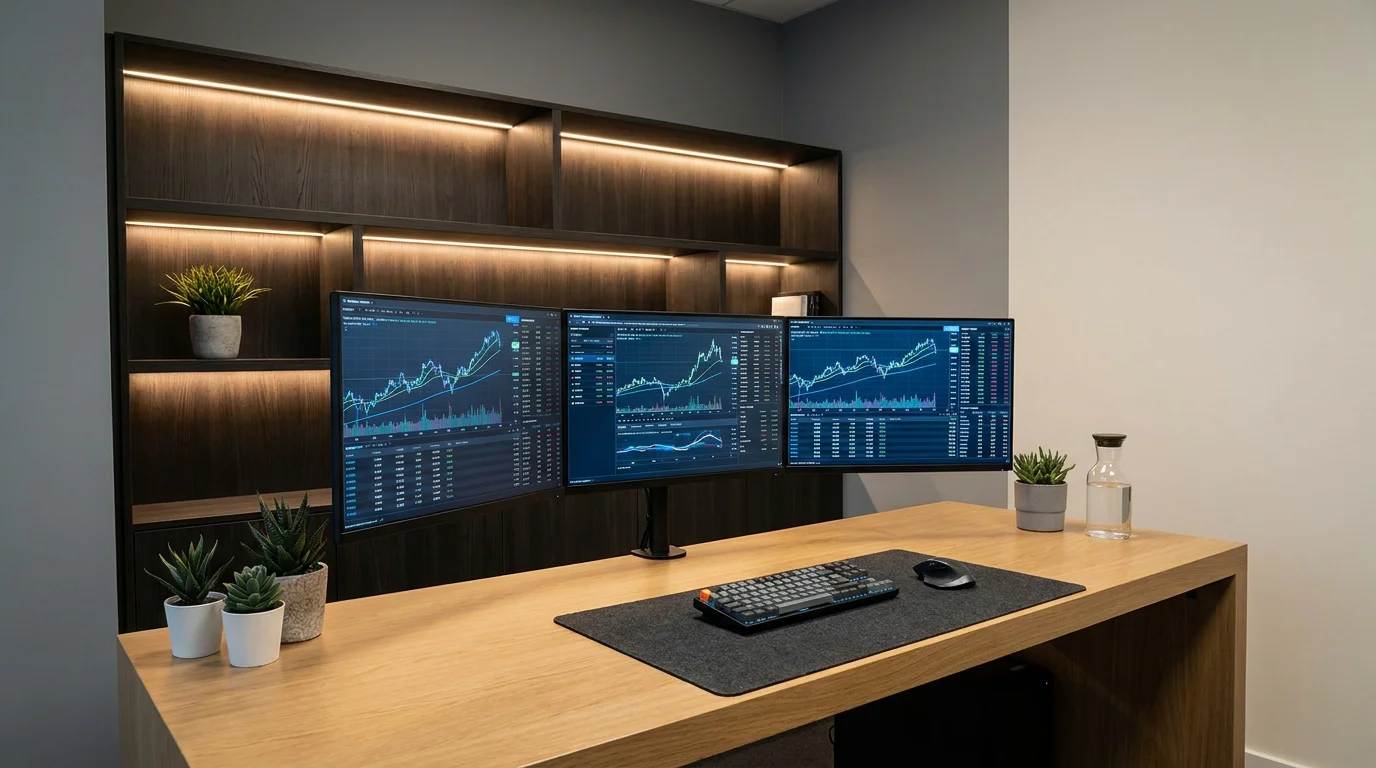

Every trade begins with a decision, but not every decision starts on equal footing. The platform you choose shapes your execution speed, your access to live pricing, and ultimately your bottom line. The global online trading platform market is expanding rapidly, and selecting the wrong infrastructure can mean missed opportunities or unnecessary costs for both retail and institutional participants.
Whether you trade equities, commodities, or carbon allowances, the proliferation of digital platforms has created both opportunity and confusion. The market will grow from $11.97 billion in 2025 to $13.02 billion in 2026 at a compound annual growth rate of 8.7%, according to Research and Markets. That growth reflects deeper structural shifts: smaller trade sizes, API connectivity, and the rise of specialized venues that serve niche asset classes. Understanding these shifts is essential before committing capital to any single platform.
What Defines a Modern Trading Platform?
A trading platform is more than a screen with a buy button. It is the software layer between your strategy and the market, responsible for order routing, real-time price monitoring, risk controls, and post-trade reporting. The quality of that layer determines whether your orders execute at the price you expect or slip into unfavorable territory.
Modern platforms generally fall into three categories. First, proprietary platforms built by brokerages for their own clients. Second, third-party commercial platforms like MetaTrader 4 and 5, which serve multiple brokers. Third, exchange-native platforms that provide direct connectivity to a specific marketplace. Each model carries different trade-offs in latency, customization, and cost.
The platform segment's growth is driven by the rising demand for scalable and high-performance trading infrastructures, and advancements in cloud computing, APIs, and modular architectures enable faster trade execution, real-time data processing, and seamless system integration. For institutional participants, the distinction between a broker vs exchange often determines which platform category fits best.
Key Features That Separate Good Platforms from Great Ones
Not all platforms are created equal. The features that matter most depend on your trading profile, but several capabilities have become non-negotiable for serious participants in 2026.
- Live price transparency: Delayed quotes cost money. Platforms that stream real-time pricing allow you to make informed decisions at the point of execution.
- Pre-trade risk controls: Position limits, margin checks, and automated stop-losses prevent catastrophic errors before they reach the order book.
- API access: Programmable connectivity lets you automate workflows, integrate with risk management systems, and build custom execution strategies.
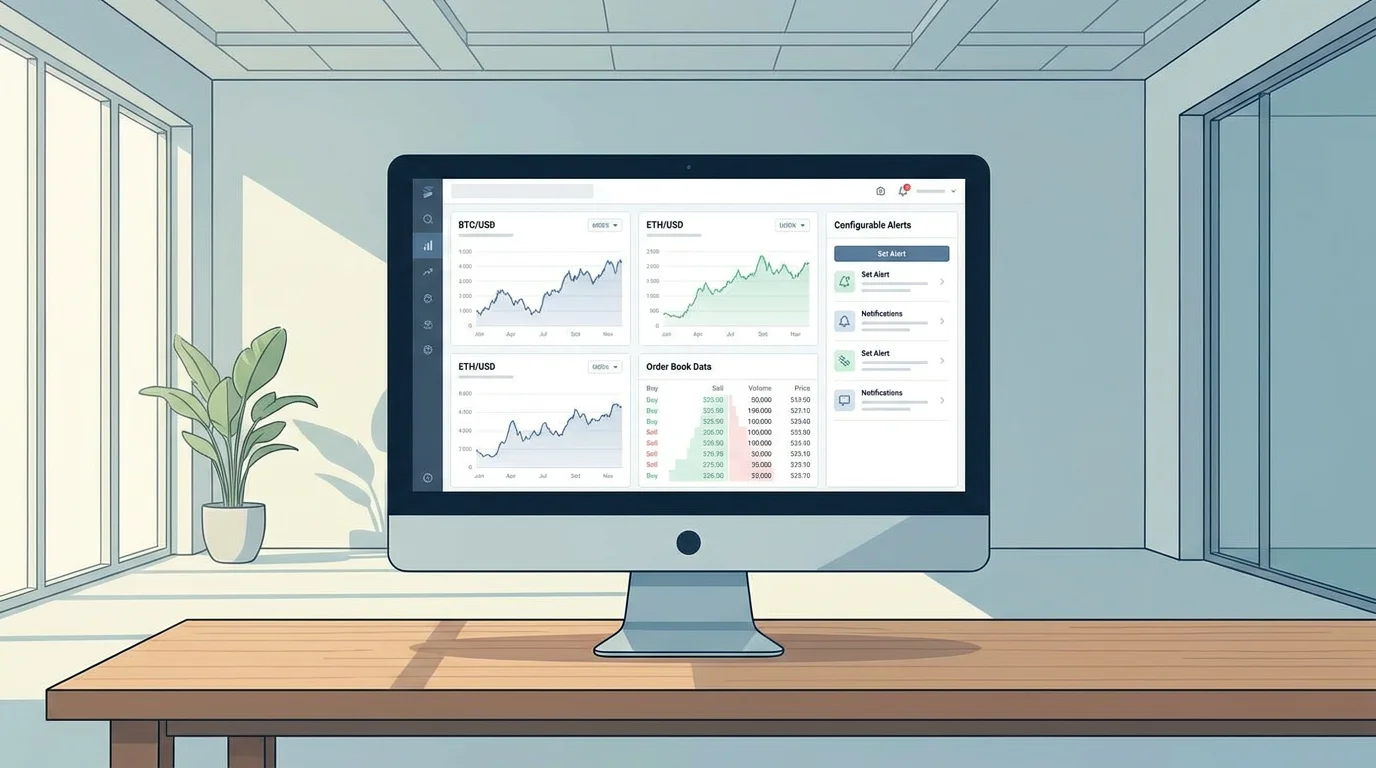
- Configurable alerts: Notifications for price thresholds, volume spikes, or margin utilization keep you informed without requiring constant screen time.
- Multi-asset support: The ability to trade across asset classes (equities, futures, options, carbon allowances) from a single interface reduces operational complexity.
Smartphones have replaced desktops as the first contact point for retail investors, making intuitive, latency-light interfaces a prerequisite for growth. Yet for professional traders, desktop environments remain critical. Serious traders favor larger displays and advanced analytics available on desktop platforms, which support multi-monitor setups and low-latency data feeds.
The Rise of Specialized and Niche Trading Platforms
While legacy brokerages compete on cost per equity trade, a new wave of platforms is targeting specific markets and user profiles. Carbon markets, for instance, have historically required large minimum lot sizes and opaque pricing, shutting out smaller compliance entities and mid-market industrials.
This is precisely the gap we built our infrastructure to address. With our trading solutions for traders and corporates, participants can trade EU Allowances starting from just 1 EUA (equivalent to 1 tonne of CO₂), compared to the traditional 1,000 EUA lot on incumbent exchanges. That reduction in minimum size, paired with transparent live pricing and programmable exchange infrastructure, opens carbon trading to entities previously priced out.
Specialization is not limited to carbon. Commodity markets, digital assets, and prediction markets are all spawning dedicated platforms that prioritize domain expertise over breadth. You can explore how different commodity markets function to understand why specialized venues often outperform generalist ones in tightly regulated asset classes.
Cost Structures: What You Pay and What You Miss
Zero-commission trading has become an industry baseline for equities and ETFs. But "free" rarely means free. Commission-free pricing reshaped competitive positioning by removing cost barriers and shifting monetization toward payment-for-order-flow and cash-management yields. Robinhood's 2024 revenue of USD 2.95 billion, with 61% sourced from order flow, illustrates how ancillary income models offset zero-commission execution.
For traders in futures, options, or specialized markets like emissions, fee structures vary significantly. Per-contract fees, spread markups, custody charges, and clearing costs all factor into total cost of ownership. A platform advertising low commissions may recoup margin through wider spreads or limited execution quality.
| Feature | Initiativ (EUA Exchange) | Traditional EUA Exchanges | Retail Equity Brokerages |
|---|---|---|---|
| Minimum Trade Size | 1 EUA | 1,000 EUAs | Fractional shares available |
| Live Price Transparency | Yes | Varies | Yes (often delayed for free tiers) |
| API Access | Yes | Limited | Varies by broker |
| Pre-trade Risk Controls | Yes | Yes | Basic |
| Asset Focus | EU Allowances (spot, futures, options) | EU Allowances | Equities, ETFs, options |
| Cash Protection | FGDR guarantee up to €100k | Varies by clearing | SIPC / FSCS (region dependent) |
When evaluating costs, the real question is: what does total execution cost look like after accounting for spread, speed, and market impact? For carbon market participants specifically, understanding the direct market access vs exchanges distinction helps clarify where fees accumulate.
Regulation and Trust: The Non-Negotiable Foundation
The regulatory environment in the U.S. is well-established and supportive of online trading activities. Regulatory bodies such as FINRA and the SEC provide a framework that ensures transparency and protects investors. The clarity and stability of these regulations contribute to investor confidence and encourage the use of online trading platforms. In Europe, MiFID II sets similarly rigorous standards for investor protection, trade reporting, and market conduct.
Choosing a regulated platform is not optional; it is the baseline. Key trust signals include segregated client funds, recognized clearing partners, and adherence to know-your-customer (KYC) and know-your-business (KYB) requirements. Platforms that operate under MiFID II professional client frameworks, for example, must meet strict onboarding, reporting, and risk disclosure obligations.
The probability of extreme loss events from cyber incidents has quadrupled since 2017, magnifying systemic risk across interconnected trading ecosystems. FINRA's 2025 report flags new account fraud and quantum-computing vulnerabilities as near-term threats. This reality makes cybersecurity posture and data protection as important as pricing when selecting a platform, according to analysis from Mordor Intelligence.
How API Connectivity Is Reshaping Platform Selection
The fastest-growing segment of the platform market is not the front-end dashboard; it is the API layer beneath it. Growth in the forecast period can be attributed to growing integration of advanced analytics tools, rising demand for personalized trading experiences, and increasing adoption of algorithmic trading.
Algorithmic trading and automated execution are no longer reserved for hedge funds with dedicated quant teams. Mid-market corporates and compliance entities increasingly need API access to connect their enterprise risk systems with exchange infrastructure. Automated procurement schedules, yield strategies, and position rebalancing depend on reliable, well-documented APIs.
We designed our platform with this in mind. Our platform solutions for brokers include programmable exchange infrastructure and API connectivity that enable participants to automate trading workflows and integrate directly with existing risk management systems. This approach reduces manual intervention and operational risk simultaneously.
European Markets and the Carbon Trading Opportunity
Europe accounted for USD 2.51 billion in 2025, representing 23.20% of the global market share. Within Europe, the EU Emissions Trading System (EU ETS) represents one of the largest regulated carbon markets in the world, yet access has long been concentrated among a handful of large incumbents.
The structural barriers are well documented: large minimum lot sizes, limited price transparency, and complex onboarding processes designed for institutional participants. These barriers have left small and mid-sized compliance entities reliant on intermediaries, adding cost and reducing control.
This is why new exchange infrastructure matters. By offering competitive fees, smaller trade increments, extended trading hours, and overnight yield, emerging platforms can serve a much broader range of participants. You can learn more about the structural dynamics at play by reading about routes to market in emissions trading.
The right platform does not just execute your trades. It determines what you can trade, when you can trade it, and how much control you retain over the entire process.
What to Consider Before Choosing a Platform
Selecting a trading platform is a strategic decision, not a convenience choice. Here is a practical framework for evaluation:
- Define your asset class: Are you trading equities, derivatives, or specialized markets like carbon allowances? Platform coverage varies widely.
- Assess execution quality: Look beyond commission rates. Measure fill rates, latency, and price improvement statistics.
- Verify regulatory status: Confirm the platform operates under a recognized regulatory framework (MiFID II, SEC/FINRA, FCA) and offers client fund protection.
- Test API documentation: If automation matters, evaluate the quality and reliability of the platform's API before committing.
- Evaluate total cost: Sum commissions, spreads, custody fees, data fees, and any minimum balance requirements.
- Consider scalability: Will the platform support your needs as trading volume grows or as you expand into new markets?
The market growth is driven by a convergence of technological, economic, and demographic factors that are reshaping how individuals and institutions invest. According to Grand View Research, these forces will push the global market to nearly $20 billion by 2033, making platform selection one of the most consequential infrastructure decisions any trading entity will make this decade.
The global online trading platform market is expanding because participants demand more: more transparency, more control, and more flexibility in how they access markets. The platforms that win will be those that align their infrastructure with these demands rather than simply repackaging legacy models. With programmable exchange infrastructure, transparent pricing from 1 EUA, and pre-trade risk controls built for both compliance entities and financial professionals, we are building the kind of access that carbon markets have needed. To see how it works firsthand, explore our vision for building the next emissions exchange and request access to our demo environment.
Frequently Asked Questions
What is the difference between a trading platform and a broker?
A trading platform is the software interface used to place and manage trades. A broker is the financial intermediary that provides market access and holds your account. Some brokers build proprietary platforms, while others rely on third-party software. In some cases, an exchange provides its own platform with direct market access, as we do with our EUA exchange infrastructure.
Are zero-commission platforms really free?
Not entirely. Most zero-commission platforms monetize through payment for order flow, interest on uninvested cash, or premium subscription tiers. You should evaluate total cost, including spread quality and execution speed, rather than commissions alone.
Which trading platform is best for carbon markets?
Traditional exchanges require large lot sizes (typically 1,000 EUAs) and offer limited flexibility for smaller participants. Our platform allows trading from 1 EUA with live price visibility, API access, and pre-trade risk controls, making it purpose-built for both small compliance buyers and professional financial participants in the EU ETS.


Let’s connect
Do you want more information about what we do?