



Choosing the best trading platform has never been more consequential. The online trading platform market is on a significant growth trajectory, projected to expand from $11.97 billion in 2025 to $13.02 billion in 2026, according to a GlobeNewswire report. With that growth comes an explosion of choices, each platform promising speed, transparency, and competitive pricing.
Yet not every platform suits every trader. Retail equity investors, institutional commodity desks, and compliance buyers in environmental markets each require fundamentally different toolsets. This guide breaks down the key criteria that define a top trading platform, examines the forces reshaping the industry, and explains why specialized exchanges are gaining ground over one-size-fits-all solutions.
What Makes a Trading Platform the "Best"?
No single platform dominates every category. The right choice depends on what you trade, how often you trade, and what level of control you need over execution and risk. A few criteria, however, are universal.
Execution speed and reliability sit at the top of every serious trader's list. Milliseconds of latency can translate into real money, especially in volatile markets. Platforms that offer direct connectivity to matching engines, rather than routing orders through multiple intermediaries, consistently deliver faster fills.
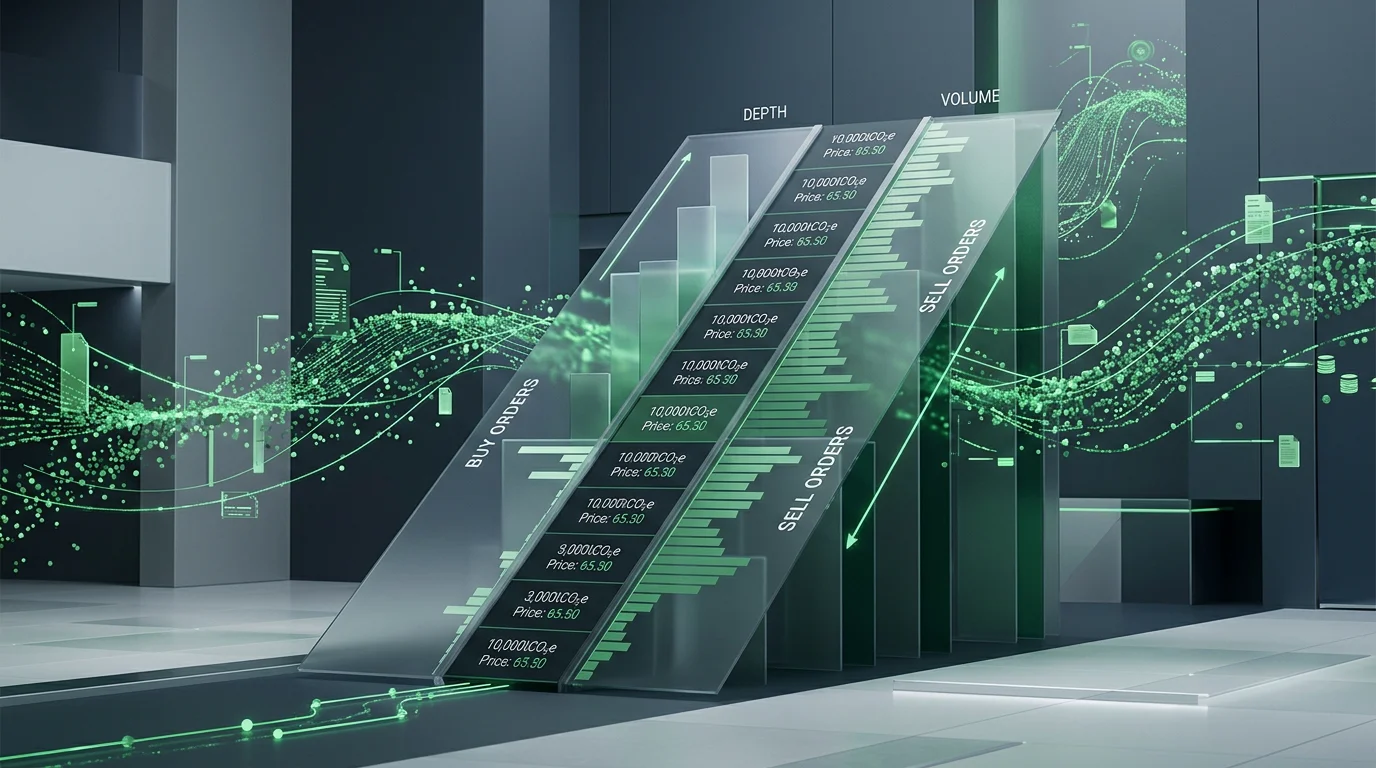
Real-time price transparency is another non-negotiable. Traders who cannot see a live order book are essentially operating in the dark. The best platforms stream live quotes and depth-of-market data so users can make informed decisions before clicking "buy" or "sell."
Cost structure matters just as much. Zero-commission models have become standard for equities and ETFs, but in derivatives, commodities, and environmental markets, fee schedules vary widely. Look beyond headline rates: clearing fees, data subscriptions, and withdrawal charges all erode returns.
Finally, risk management tools separate professional-grade platforms from basic apps. Pre-trade risk controls, configurable alerts, and position-level monitoring help you avoid costly mistakes, especially when automating execution through APIs.
The Forces Reshaping Online Trading in 2026
Increased retail investor participation, greater internet and smartphone penetration, enhanced online brokerage services, and the availability of cost-effective trading platforms are the primary forces driving today's market expansion. But several deeper shifts deserve attention.
Mobile-first adoption is accelerating. Charles Schwab disclosed that mobile app sessions jumped 34% in 2025, with 62% of retail orders now placed via handheld devices, according to Mordor Intelligence. Platforms that lack a fully featured mobile experience are losing ground rapidly.
API-driven infrastructure is another defining trend. White-label APIs are unbundling brokerage services, allowing neobanks to embed trading while sidestepping the capital burden of full broker-dealer licenses. For institutional participants, API access enables algorithmic execution, automated risk monitoring, and seamless integration with enterprise resource planning systems.
Key factors driving market growth include increasing retail investor participation and technological advancements in AI and automation, according to Grand View Research. AI-powered analytics are helping traders identify patterns, predict volatility, and optimize order timing. The platforms that harness these technologies without sacrificing simplicity will define the next wave of market leaders.
Key Features to Evaluate Before You Commit
When comparing trading platforms, a checklist of core capabilities ensures you do not overlook what matters most. Below is a structured comparison of the criteria that distinguish platforms across asset classes.
| Feature | Why It Matters | What to Look For |
|---|---|---|
| Live price streaming | Informs every buy/sell decision | Tick-by-tick data with minimal delay |
| Pre-trade risk controls | Prevents oversized or erroneous orders | Configurable limits, margin checks |
| API access | Enables automation and system integration | RESTful or FIX protocol support |
| Flexible lot sizes | Lowers barriers for smaller participants | Minimum trade size below standard lots |
| Regulatory compliance | Protects capital and ensures legitimacy | MiFID II, SEC, or equivalent oversight |
| Clearing and custody | Ensures settlement certainty | Recognized clearing partners, deposit guarantees |
The weighting of each feature varies by trader profile. Retail equity traders may prioritize zero commissions and a polished mobile app. Institutional and compliance-driven traders, on the other hand, need robust APIs, regulatory alignment, and transparent fee schedules far more than they need social features or gamified interfaces.
Specialized Platforms vs. General-Purpose Brokers
Most "best trading platform" lists focus on equities and options. That perspective overlooks a growing segment of the market: specialized exchange platforms built for specific asset classes such as commodities, foreign exchange, and environmental instruments like carbon allowances.
General-purpose brokers offer breadth. They cover stocks, ETFs, options, and sometimes crypto under one roof. This convenience comes at a cost: execution infrastructure is optimized for the highest-volume asset classes, while niche markets receive less attention. Understanding the difference between a broker vs exchange is essential when evaluating where your orders actually get filled.
Specialized platforms take the opposite approach. By focusing on a single market or asset class, they can tailor their matching engines, lot sizes, and risk frameworks to the exact needs of participants in that market. For professionals trading EU Allowances, energy derivatives, or other commodity markets trading instruments, a purpose-built exchange often delivers tighter spreads, faster fills, and more relevant data.
The choice between generalist and specialist also affects how you access the market. Exploring direct market access vs exchanges helps clarify whether your orders benefit from intermediation or from direct connectivity to a central order book.
Why Accessibility and Transparency Define the Best Platforms

Transparency has become a competitive differentiator, not just a regulatory checkbox. Online trading software has become essential for investors due to access to a wide range of investment options, cost-effectiveness, convenience, transparency, and control over their investment portfolios, as noted by Precedence Research.
Accessibility goes beyond offering a mobile app. It means lowering the minimum trade size so that smaller firms and newer participants can enter markets previously reserved for large institutions. In carbon markets, for example, the standard lot of 1,000 EU Allowances (EUAs) has long excluded mid-market industrial companies that only need to trade a few tonnes at a time.
We built our exchange specifically to solve this problem. Our trading platform for traders and corporates allows participants to trade from just 1 EUA, equivalent to 1 tonne of CO₂, with live price visibility and pre-trade risk controls built in. By combining small lot sizes, competitive fees, and programmable infrastructure, we make carbon markets as accessible as mainstream financial markets.
The Rise of Environmental Trading Platforms
Carbon markets represent one of the fastest-growing areas of exchange-based trading in Europe. The EU Emissions Trading System (EU ETS) is the world's largest compliance carbon market, and its participants increasingly demand the same execution quality and transparency found in equity and commodity markets.
Yet legacy infrastructure in carbon trading has lagged behind. Many compliance entities still trade through voice brokers, bilateral agreements, or platforms designed decades ago. The result is opaque pricing, high minimum order sizes, and limited access to derivatives like futures and options.
A new generation of platforms is changing that. Understanding the routes to market in emissions trading reveals why purpose-built exchanges are displacing fragmented, intermediated workflows. These platforms bring spot, futures, and options onto a single venue with real-time data, API access, and programmable order types.
For compliance entities and financial participants alike, these developments mean faster onboarding, lower operational risk, and the ability to automate procurement and hedging strategies that were previously manual.
Comparing Platforms: What the Data Tells Us
Rather than ranking platforms on subjective scores, the most useful comparison focuses on measurable criteria. The table below contrasts general-purpose brokers with a specialized exchange approach across the dimensions that matter most to professional and institutional traders.
| Criterion | General-Purpose Brokers | Initiativ (Specialized Exchange) |
|---|---|---|
| Asset focus | Stocks, ETFs, options, crypto | EU Allowances (spot, futures, options) |
| Minimum trade size | Varies; often 1 share | 1 EUA (1 tonne CO₂) |
| Live price transparency | Varies by tier | Real-time for all participants |
| Pre-trade risk controls | Available on premium tiers | Standard on all accounts |
| API access | Usually available | Full API for automation and integration |
| Regulatory framework | SEC/FINRA (U.S.), varies in EU | MiFID II, FGDR guarantee up to €100k |
| Trading hours | Market hours + some extended | Longer trading hours |
General-purpose brokers serve the retail equity market well. However, for participants in the EU ETS, the specialized approach addresses pain points that generalist platforms were never designed to solve: fractional lot sizes, compliance-grade custody through the European register, and derivatives specifically structured for carbon markets.
How to Choose the Right Platform for Your Needs
Start by defining your primary asset class. If you trade equities and ETFs in the U.S., established brokers with zero-commission models and strong charting tools will serve you. If you trade European carbon allowances or other environmental instruments, a specialized exchange is likely the better fit.
Next, evaluate your operational requirements. Do you need API-driven automation? Will multiple team members need access with differentiated permissions? Does your compliance framework require pre-trade controls and auditable order records? The answers to these questions will narrow your shortlist quickly.
Consider cost holistically. A platform with "zero commissions" on equities may charge for data, inactivity, or currency conversion. Conversely, a platform with explicit transaction fees might offer tighter spreads and better execution quality, ultimately reducing your total cost of trading.
Finally, test before you commit. Most reputable platforms offer demo environments or paper trading modes. Use them to evaluate speed, interface clarity, and the responsiveness of customer support before placing real capital at risk.
Making the Decision: From Research to Execution
The best trading platform is ultimately the one that aligns with your asset class, execution needs, and operational complexity. The market is growing, with projections pointing toward $18.29 billion by 2030, and the options available to traders will only multiply. Cutting through the noise requires focusing on measurable outcomes: execution quality, price transparency, risk controls, and total cost.
For participants in carbon and environmental markets, we designed our platform to deliver exchange-grade infrastructure with the accessibility that compliance entities and professional traders need. From programmable order types to real-time pricing and small lot sizes, we remove the barriers that have kept smaller participants on the sidelines.
If you are ready to explore how a purpose-built exchange can transform your trading workflow, discover our next-generation emissions exchange and see the difference firsthand.
Frequently Asked Questions
What is the most important feature of a trading platform?
Real-time price transparency and execution speed are widely regarded as the most critical features. Without accurate, live pricing, traders cannot make informed decisions. Pre-trade risk controls and API access are also essential for professional and institutional participants.
Are specialized trading platforms better than general-purpose brokers?
It depends on what you trade. For mainstream equities and ETFs, general-purpose brokers provide adequate coverage. For niche or regulated markets such as EU carbon allowances, specialized platforms like Initiativ offer tailored lot sizes, compliance frameworks, and instruments that generalist platforms do not support.
How do I evaluate the total cost of using a trading platform?
Look beyond commissions. Factor in data fees, clearing costs, withdrawal charges, and the implicit cost of wide spreads or slow execution. A platform with explicit but competitive fees and tight spreads often delivers a lower total cost than a nominally "free" alternative.

Let’s connect
Do you want more information about what we do?