




Nearly 30% of global greenhouse gas emissions are now covered by direct carbon pricing. For participants evaluating carbon market price trends, that expansion creates opportunity, but it also makes simple price comparisons increasingly misleading. Our carbon market data and price trends resources help readers separate allowance prices, credit prices, and the market forces behind each signal.
The 2026 market is not defined by one global carbon price. According to the World Bank report, 87 direct carbon pricing policies were implemented globally in 2026, while average direct carbon prices had nearly doubled over the previous decade. The practical question is no longer whether carbon has a price, but which price applies to your instrument, jurisdiction, and objective.
What do carbon market price trends show in 2026?
The clearest pattern is market fragmentation. Compliance markets trade regulated allowances created under a fixed cap, while voluntary markets trade project-based credits created through emissions reduction or removal activities.
| Market type | Unit traded | Main price drivers | Typical use |
| Compliance market | Allowances or eligible compliance units | Cap design, emissions, energy prices, policy, and compliance demand | Meeting legal emissions obligations |
| Voluntary carbon market | Project-based carbon credits | Project type, quality, vintage, permanence, location, and buyer preferences | Supporting voluntary climate strategies and eligible claims |
This distinction matters because a lower voluntary credit price does not necessarily represent a cheaper substitute for an EU Allowance. The instruments have different legal functions, supply structures, verification processes, and buyers.
For financial participants, the difference also affects liquidity and execution. Compliance allowances generally have more standardized contracts and established derivatives markets. Voluntary credits remain more heterogeneous, with prices often negotiated according to project-specific characteristics.
Why do EU Allowances and voluntary credits move differently?
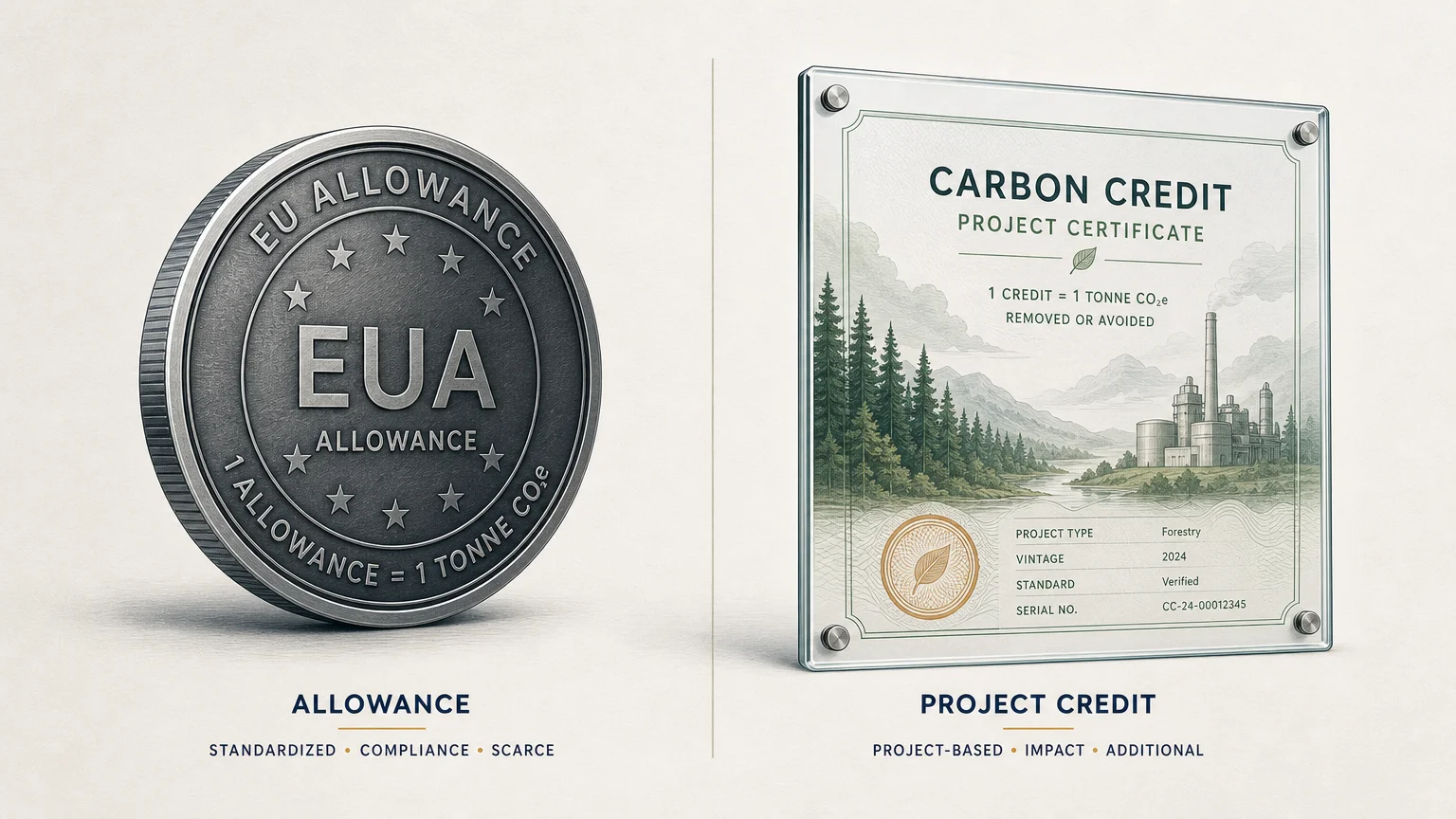
Carbon allowances are tied to a regulated emissions ceiling. Their value reflects how difficult it is for covered entities to obtain enough units for compliance. When the cap tightens, emissions remain elevated, or future scarcity becomes more credible, allowance prices can strengthen.
EU Allowances can also respond to electricity generation, fuel switching, industrial output, weather, and expectations for future regulation. A utility deciding between coal and gas, for example, may change its allowance demand when relative fuel economics shift.
Voluntary credits follow a different pricing logic. A credit may represent avoided emissions, reduced emissions, or carbon removal. Its price can depend on additionality, measurement quality, permanence, leakage risk, certification, vintage, geography, co-benefits, and the buyer’s reporting requirements.
This is why a market-wide average can conceal large differences. A low-cost avoidance credit, a nature-based removal, and a durable engineered removal may all represent one tonne of carbon dioxide equivalent, but they do not offer the same risk profile or permanence.
Participants who need a structured view of future allowance scenarios can consult our EUA price trends and forecasts. The objective is not to treat a forecast as certainty, but to connect price expectations with procurement timing, risk limits, and possible compliance requirements.
Which forces are driving EU ETS price movements?
Several factors interact in the EU ETS. The first is the emissions cap, which determines the broad path of allowance supply. A declining cap can create structural upward pressure, although lower emissions or weaker industrial activity can offset that effect in the short term.
The second factor is the distribution of allowances. Auctioning has been the default allocation method since 2013. During the 2021 to 2030 period, up to 57% of general allowances may be auctioned, while the remaining units can be allocated freely under rules intended to address carbon leakage.
The European Commission auctioning rules also show how carbon pricing connects to public finance. Auction revenues support national budgets and European climate funds, which reinforces the importance of allowance prices beyond individual trading positions.
The Market Stability Reserve is another important mechanism. It adjusts auction volumes when the allowance surplus reaches defined thresholds. This can alter the balance between immediate supply and future scarcity, especially when emissions fall faster than expected.
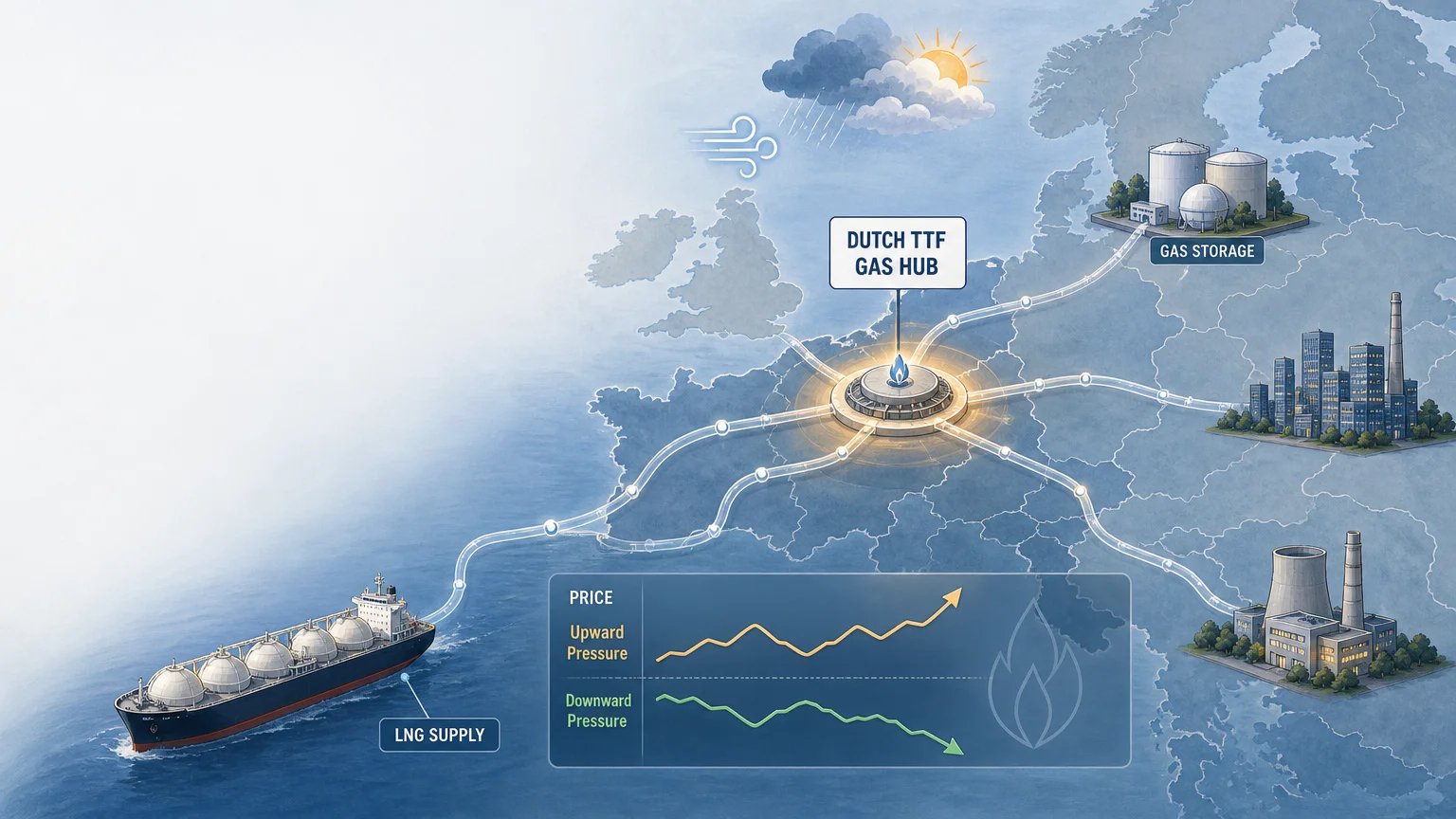
Energy prices and weather can create shorter-term volatility. Lower gas prices can encourage gas generation over coal, reducing allowance demand. Mild weather can lower power consumption, while colder conditions can increase generation and emissions. Industrial production, aviation, maritime activity, and macroeconomic expectations add further pressure.
Research on EU ETS forecasting also points to the importance of combining market prices with emissions and macroeconomic variables. A forecasting study found that models using broader economic information can improve on simpler benchmark approaches when estimating carbon price behavior.
For market participants, the implication is practical. A price chart alone is not enough. You should monitor the cap trajectory, auction calendar, energy complex, emissions data, regulatory announcements, and forward curve together.
How are voluntary carbon credit prices changing?
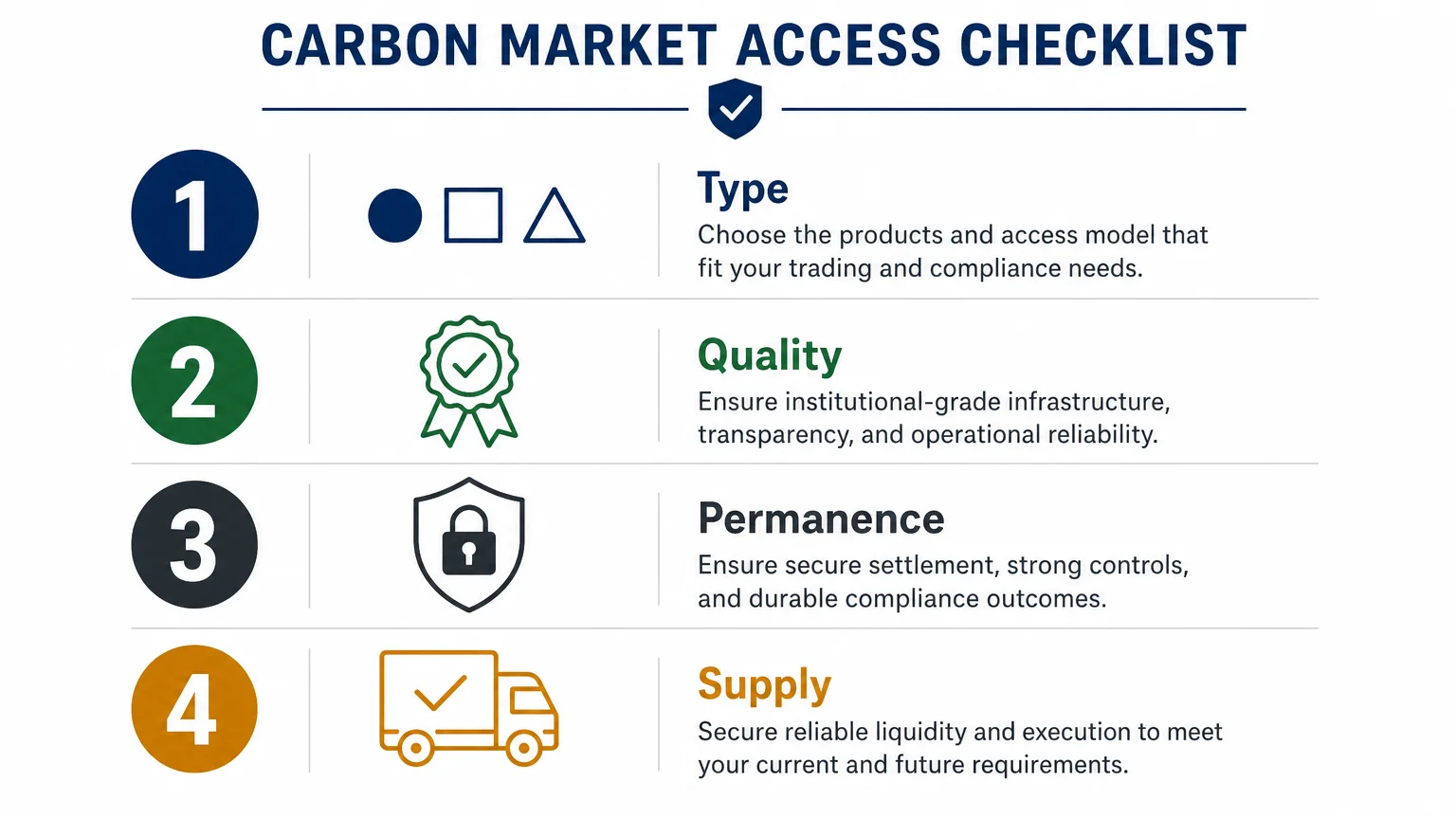
The voluntary market is increasingly defined by a quality premium. Buyers are becoming more selective about the projects they can support, the claims they can make, and the evidence they need for internal or external scrutiny.
Project type remains one of the strongest price differentiators. Avoidance and reduction projects can offer larger volumes at lower prices. Nature-based removals may attract a premium when they provide credible monitoring, permanence safeguards, and measurable environmental benefits.
Durable removals can command much higher prices because they involve more expensive technologies, longer storage expectations, and limited near-term supply. Direct air capture, mineralization, and some biochar pathways therefore sit in a different pricing category from many conventional avoidance credits.
Vintage also matters. Recent credits may be preferred because they reflect newer methodologies, stronger monitoring practices, or greater alignment with evolving buyer standards. Older credits can face discounts when buyers perceive greater uncertainty around additionality, permanence, or eligibility.
Location and co-benefits influence value as well. Buyers may pay more for projects with stronger community safeguards, biodiversity outcomes, transparent benefit sharing, or a geographic connection to their operations. These preferences can create premiums that are not visible in broad market averages.
The result is a two-speed voluntary market. Lower-quality or less differentiated credits may remain available at modest prices, while high-integrity projects experience tighter supply and stronger demand. This does not mean price alone proves quality. Buyers should assess the methodology, monitoring, verification, permanence, and claims framework together.
Why geography and currency matter when comparing carbon prices
Carbon prices are not directly comparable across jurisdictions without considering coverage, compliance rules, compensation mechanisms, and currency. A price quoted in euros for the EU ETS reflects a regulated allowance market. A price quoted in dollars for a project credit may reflect a negotiated transaction with very different terms.
Even within compliance markets, a higher nominal price does not automatically indicate stronger climate ambition. The relevant question is how much of the economy is covered, which sectors face obligations, whether free allocation applies, and how the price interacts with energy and industrial policy.
Currency movements add another layer. A European buyer measuring costs in dollars may see its effective carbon expense change even when the euro price is stable. International portfolios therefore need both local price tracking and a consistent reporting currency.
The same principle applies to voluntary procurement. A credit from a project in one region may be cheaper because of development costs, supply conditions, or local demand. Another may command a premium because buyers value domestic impact, stronger documentation, or specific co-benefits.
For international organizations, the most reliable comparison uses a common framework. Record the unit type, market, vintage, project methodology, location, currency, delivery terms, and whether the price is spot, forward, or part of an offtake agreement.
How should traders and corporates use these trends?
Start by separating compliance exposure from voluntary procurement. An industrial operator subject to the EU ETS may need allowances for surrender obligations. A corporate sustainability team may instead be evaluating project credits for residual emissions or climate finance. These are related markets, but they require different budgets and controls.
Next, distinguish spot prices from forward prices. A spot quote describes current delivery conditions. A forward contract incorporates expectations about future supply, project delivery, policy, financing, and counterparty risk. Comparing them without adjusting for timing can create a false impression of market value.
Scenario planning is more useful than a single forecast. Consider a base case, a higher-price case, and a lower-price case. Each scenario should specify assumptions for emissions, energy prices, allowance supply, regulatory changes, credit quality, and procurement timing.
Execution infrastructure also matters. Our exchange supports professional access to EU Allowances in spot and derivatives form, including futures and options. Members can monitor live prices, configure alerts, apply pre-trade risk controls, and connect through an API for automated workflows.
For brokers and institutional trading desks, our platform also supports order-book access, market, limit, and iceberg orders, off-book block execution, transaction monitoring, reporting, confirmation, and settlement workflows. These functions can help connect market analysis with operational execution rather than leaving price monitoring in a separate process.
Before selecting a trading venue or workflow, review eligibility, KYC and KYB requirements, professional-client status under MiFID II, custody arrangements, clearing, fees, market hours, and reporting processes. Our carbon market reports and pricing data provide additional context for teams building that evaluation framework.
What is the practical outlook for carbon prices?
The broad direction in 2026 is toward more differentiated pricing. Regulated allowance markets are shaped by increasingly explicit policy signals and tighter supply frameworks. Voluntary markets are moving toward stronger segmentation between widely available credits and scarce, higher-integrity supply.
That does not guarantee a straight upward path. Allowance prices can fall when emissions weaken, energy markets change, or policy expectations soften. Voluntary credit prices can decline in oversupplied categories even while premiums increase for removals or projects with stronger integrity characteristics.
The most resilient approach is therefore selective rather than directional. Traders should monitor liquidity, forward curves, spreads, and policy events. Corporate buyers should prioritize clear eligibility, credible project evidence, delivery terms, and a procurement strategy that can adapt to changing supply.
Price intelligence becomes more valuable as markets expand. The objective is not simply to find the lowest quoted tonne. It is to understand what the price represents, what risks it carries, and whether the instrument meets the intended compliance, investment, or climate objective.
Conclusion: interpret the signal before acting
Carbon market price trends in 2026 are best understood through market structure rather than headline numbers. EU Allowances respond primarily to policy, caps, energy economics, emissions, and compliance demand, while voluntary credits reflect project quality, permanence, vintage, location, and buyer requirements. Before trading or procuring, identify the instrument, define the objective, compare like with like, and use scenarios instead of relying on one price point.
Turn Carbon Price Signals Into Executable EUA Workflows
When carbon prices influence compliance budgets, trading strategies, or procurement schedules, your team needs visibility from market data through settlement. A connected workflow can reduce manual handoffs and help professional participants respond to changing conditions with clearer controls.
We provide carbon market trading solutions for traders and corporates, including EUA spot and derivatives access, live price monitoring, configurable alerts, pre-trade risk controls, API connectivity, position management, and reporting workflows. Explore the platform when you are ready to evaluate a more structured approach to EU carbon-market execution.
Frequently Asked Questions
What are carbon market price trends?
Carbon market price trends describe how allowance and carbon credit prices change over time. The drivers differ by market, with compliance prices responding mainly to regulation and emissions, while voluntary credits reflect project and buyer characteristics.
Why is there no single global carbon price?
Carbon pricing systems use different instruments, coverage rules, currencies, caps, taxes, and compliance obligations. Voluntary credits also vary by project type, quality, vintage, location, and permanence, so their prices cannot be treated as one standardized benchmark.
What factors influence EU Allowance prices?
EU Allowance prices respond to the emissions cap, auction supply, the Market Stability Reserve, energy prices, industrial output, weather, regulatory expectations, and compliance demand. Forward prices also reflect expectations about future scarcity and policy implementation.
Are voluntary carbon credits cheaper than EU Allowances?
Some voluntary credits are quoted below compliance allowances, but the comparison is not necessarily meaningful. They serve different purposes and can differ significantly in verification, permanence, eligibility, delivery terms, and buyer requirements.
Can Initiativ support professional carbon-market trading?
Yes. We support professional participants with EUA spot and derivatives trading, live market monitoring, alerts, pre-trade risk controls, API access, position management, block execution, reporting, confirmation, and settlement workflows.
This may interest you



Let’s connect
Do you want more information about what we do?