




With EU carbon permits reaching 77.46 EUR per tonne in mid-2026, the cost of non-compliance has never been higher. For industrial operators, shipping companies, and financial participants, readiness for the EU Emissions Trading System is no longer a seasonal exercise; it is a continuous strategic imperative. Missing surrender deadlines, misjudging allowance needs, or trading at unfavorable prices can erode margins and attract heavy penalties.
The regulatory landscape in 2026 introduces significant new obligations. The definitive stage of the Carbon Border Adjustment Mechanism (CBAM) has begun, free aviation allowances have been fully phased out, and maritime coverage now extends to methane and nitrous oxide. Whether you are a compliance entity managing emissions or a financial firm seeking exposure to carbon markets, understanding ets readiness in its full scope is essential. This guide breaks down the compliance framework, the market dynamics, and the operational steps required to participate with confidence.
What Does EU ETS Compliance Actually Require?
The EU ETS cap is expressed in emission allowances, with one allowance granting the right to emit one tonne of CO₂ equivalent. Allowances are sold in auctions and may be traded, and as the cap decreases, so does the supply of allowances to the EU carbon market. Understanding this mechanism is the first step toward genuine preparedness.
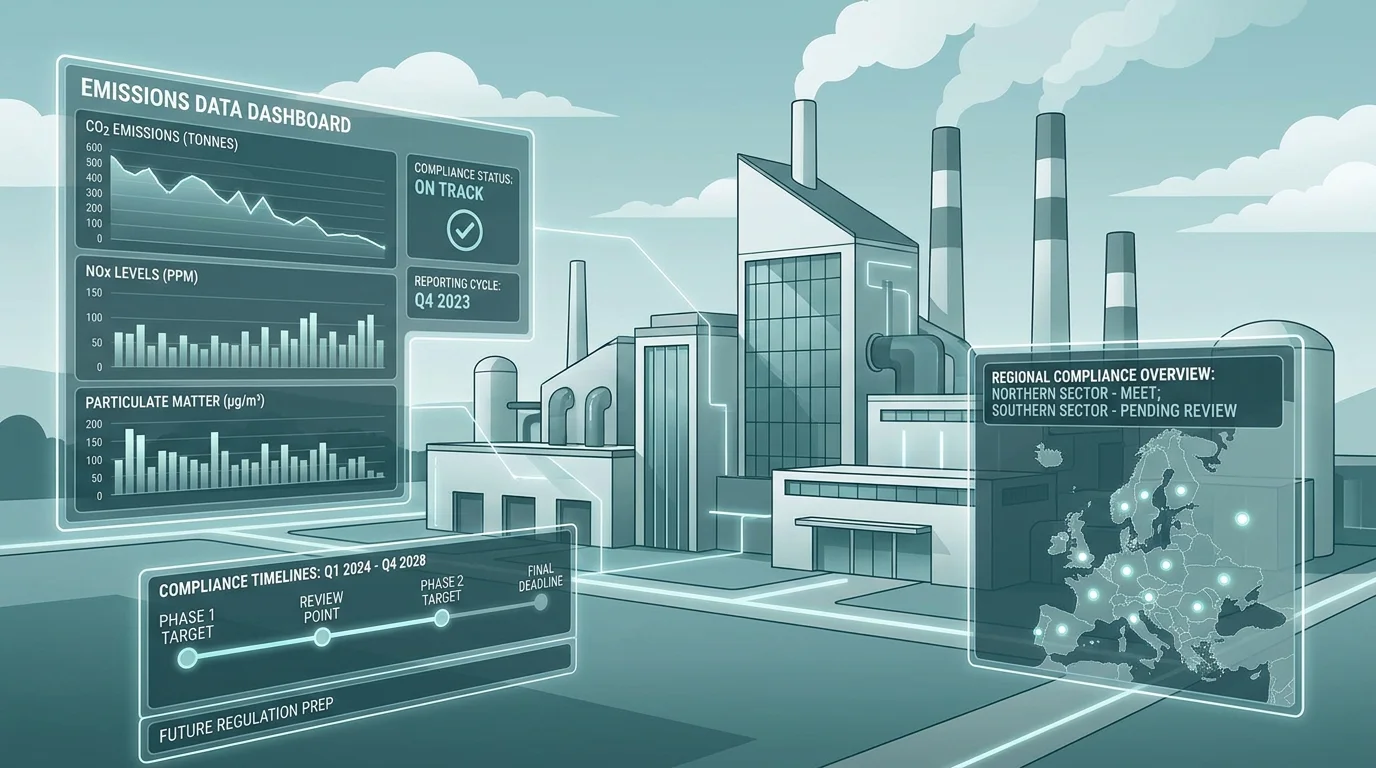
The EU ETS compliance cycle refers to the annual process of monitoring, reporting, and verification (MRV) of greenhouse gas emissions, including associated procedures; for the system to operate effectively, the MRV process must be robust, transparent, consistent, and accurate. For emissions in each calendar year, operators must carry out monitoring procedures, prepare an emissions report, have that report verified by an accredited verifier and submitted to the competent authority by 31 March of the following year, and then surrender emission allowances via the Union Registry by 30 September.
Under the system, companies must monitor and report their emissions on a yearly basis and surrender enough allowances to fully account for their annual emissions; if these requirements are not met, heavy fines are imposed. The compliance rate across the system exceeds 97%, which demonstrates that participants take these deadlines seriously.
Key Regulatory Changes Taking Effect in 2026
The year 2026 marks a pivotal moment for the EU ETS. Several structural changes are reshaping the compliance landscape simultaneously, and any organization seeking full preparedness must account for each one.
From 2026, the definitive stage of the EU's CBAM starts. This means that EU importers of carbon-intensive goods will begin surrendering CBAM certificates based on the embedded emissions of their imports. By September 30, 2027, EU importers will have to surrender CBAM certificates for 2.5% of the greenhouse gas emissions embedded in relevant goods imported in 2026.
In aviation, free emission allowances for operators were down to 50% in 2025 and are fully phased out as of 2026. In parallel, a per-tonne financial support for sustainable aviation fuels was introduced to incentivize uptake while free allocations are phased out. For aviation operators, this transition demands a fundamental rethink of allowance procurement strategies.
From 2026 onwards, the scope of covered emissions in the maritime sector expands to include CH₄ and N₂O. According to the 2025 Carbon Market Report published by the European Commission, compliance was high during the first year of maritime inclusion, with shipping companies surrendering allowances for more than 99% of their relevant requirements by the 30 September deadline.
Additionally, a new emissions trading system, called ETS2, has been created to cover emissions from buildings, road transport, and additional sectors; the new system will become operational in 2027. Organizations in these sectors should begin their preparation now.
Understanding the Carbon Price Environment
Readiness is not only regulatory; it is also financial. The price of EU Allowances directly determines the cost of compliance and the returns available to financial participants.
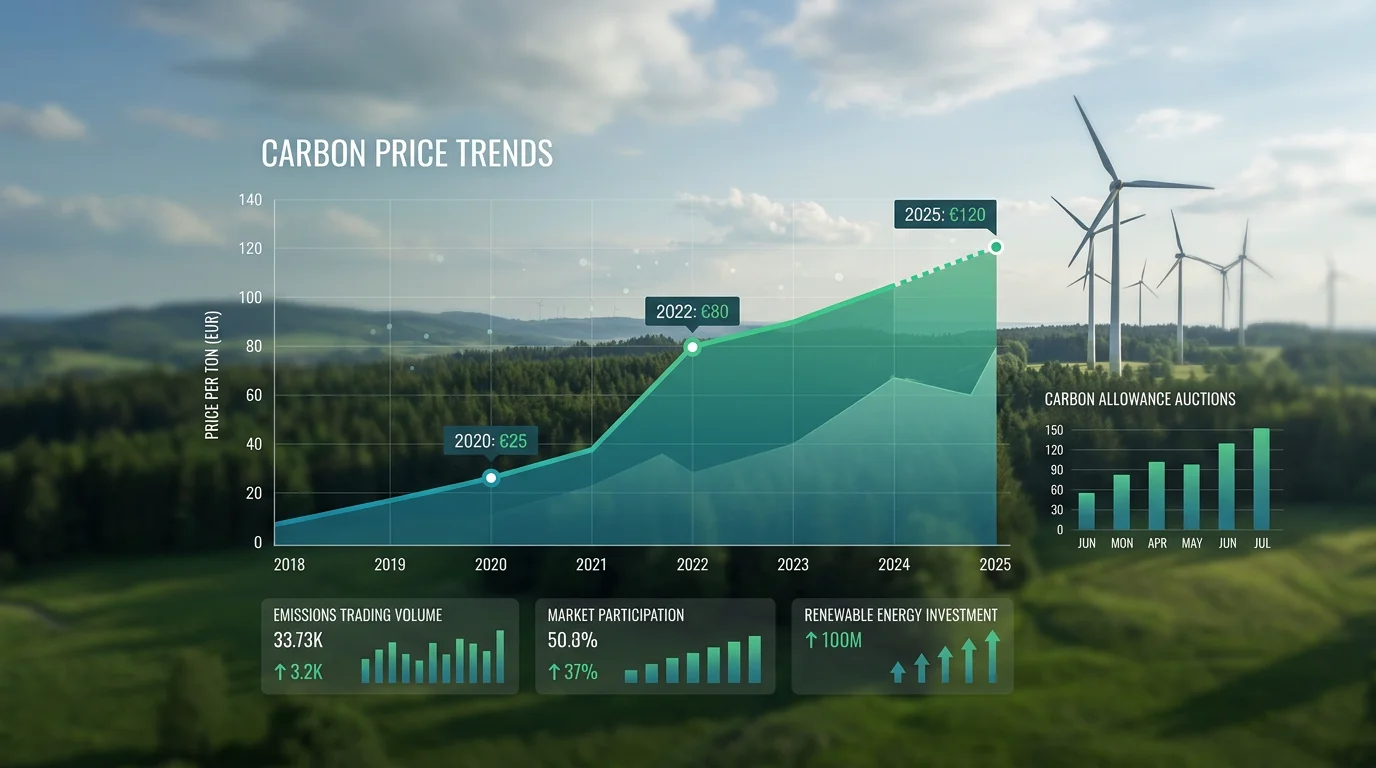
According to Trading Economics, EU carbon permits increased to 77.46 EUR in mid-2026, the highest since April 2026, gaining 3.53% over the preceding four weeks and 7.83% over the last twelve months. Price movements of this magnitude underscore the importance of real-time price monitoring and the ability to execute trades swiftly.
The cap on emissions is set to reduce covered sectors' emissions by 62% compared to 2005 levels by 2030. The linear reduction factor is set at 4.3% per year for 2024 to 2027, and 4.4% from 2028. This accelerating cap reduction means the supply of allowances will tighten further, creating sustained upward price pressure over the remainder of Phase 4.
Since 2013, the EU ETS has raised over EUR 175 billion, according to the European Commission. This revenue scale reflects both the maturity and the financial significance of the carbon market. For trading firms, asset managers, and hedge funds, this is a market that demands the same level of infrastructure and risk management as any other major commodity.
Operational Readiness: Building Your Trading Infrastructure
Many organizations focus heavily on regulatory compliance while neglecting the operational side of carbon market participation. True preparedness requires a trading infrastructure that enables efficient execution, robust risk controls, and seamless integration with existing systems.
Traditional carbon exchanges have historically required minimum trade sizes of 1,000 EUAs, equivalent to 1,000 tonnes of CO₂. This threshold can be prohibitive for smaller compliance entities or for firms that wish to fine-tune their positions without committing to large blocks. We have designed our exchange to allow trading from just 1 EUA, removing that barrier and giving participants the precision they need.
Operational readiness also involves API-enabled automation. For financial participants managing carbon alongside other asset classes, the ability to integrate allowance trading into existing risk management and order management systems is critical. Our programmable exchange infrastructure supports this integration, enabling automated strategies, configurable alerts, and pre-trade risk controls that mirror the standards of established financial markets.
Why Smaller Trade Sizes Change the Compliance Equation
Consider a mid-sized industrial operator whose verified emissions for the year total 2,340 tonnes of CO₂. Under a traditional 1,000-lot system, this operator can only purchase allowances in blocks, leading to either a surplus or a shortfall that must be reconciled through additional transactions. This inefficiency creates unnecessary cost and administrative burden.
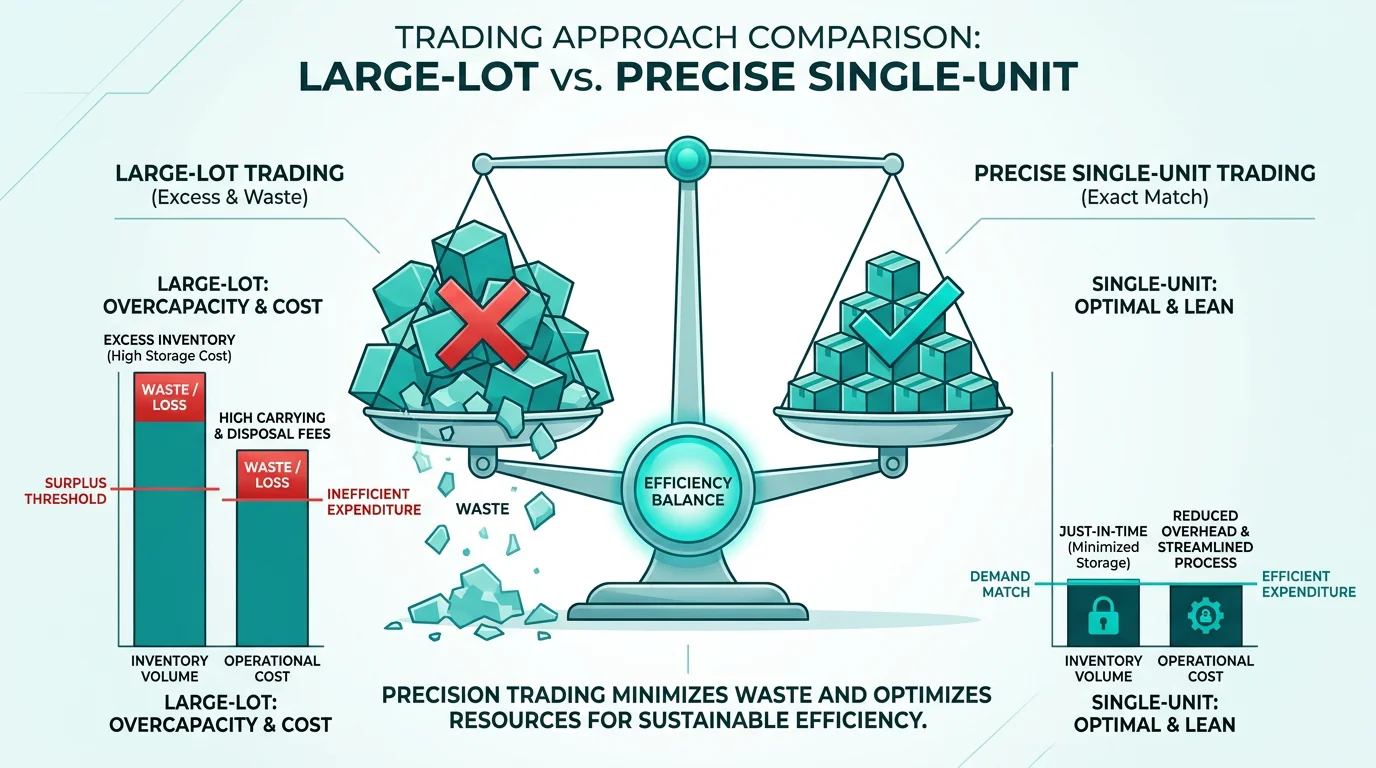
The ability to trade from a single EUA transforms this dynamic entirely. Organizations can match their purchases precisely to their verified emissions, avoiding over-procurement and freeing up capital for decarbonization investments. For carbon brokers serving multiple clients, granular lot sizes also simplify portfolio management.
This precision matters even more in a rising price environment. When each allowance costs upward of 75 EUR, even a modest overshoot of 100 unnecessary EUAs represents a significant expense. Operational flexibility at the trade-size level is, therefore, a meaningful component of financial readiness.
Risk Management for Carbon Market Participants
The EU ETS is a regulated financial market, and participants face the same categories of risk found in any commodity market: price risk, counterparty risk, liquidity risk, and operational risk.
Price risk is perhaps the most visible. With the linear reduction factor accelerating the cap decline, and with new sectors entering the system, the structural trend favors higher prices. However, short-term volatility remains significant. Pre-trade risk controls, including exposure limits and price alerts, are essential tools for managing this exposure. Through our real-time monitoring and alert system, participants can track price events automatically and act before market moves become costly.
Counterparty risk is mitigated through clearing arrangements. Our platform operates with clearing partners and a banking partner, with cash protected and guaranteed up to 100,000 EUR by the FGDR. Emission allowances are held via the public European register, providing an additional layer of security and transparency.
Operational risk extends to the compliance cycle itself. Industrial installations and aircraft operators covered by the EU ETS must get their monitoring plan approved by the competent authority before the start of the monitoring period, and the monitoring plan is part of the greenhouse gas emissions permit required for industrial installations. Failing to maintain approved monitoring plans or missing reporting deadlines can trigger enforcement action, regardless of whether an entity holds sufficient allowances.
The Expanding Scope: Maritime, Aviation, and ETS2
One of the most consequential aspects of 2026 readiness is the expanding perimeter of the EU ETS. The system is no longer limited to stationary industrial installations and intra-EEA flights.
2024 was the first year that CO₂ emissions from maritime transport were included in the EU ETS, and the system now covers 50% of emissions from voyages departing or arriving outside of the European Economic Area, plus all emissions between two EEA ports and at EEA ports. Shipping companies must surrender allowances equal to 40% of their verified 2024 CO₂ emissions and 70% for 2025. Full surrender obligations at 100% are expected in subsequent years, making early preparation indispensable for the maritime sector.
In May 2025, the EU and the UK announced their intention to link their respective emissions trading systems, and the EU Council subsequently granted the Commission a negotiating mandate to start formal talks. A linked EU-UK carbon market would substantially alter the trading landscape, and participants should monitor developments closely.
Looking ahead, the Social Climate Fund has been created to address the social impact of carbon pricing in the sectors covered by ETS2, mobilizing EUR 86.7 billion from ETS2 revenue in the 2026 to 2032 period. The scale of this fund signals the magnitude of the policy shift. Entities in buildings, road transport, and related sectors should begin assessing their emissions profiles and allowance needs well before the 2027 launch.
A Strategic Readiness Checklist for 2026
Achieving genuine EU ETS preparedness requires action across multiple dimensions. The following checklist summarizes the essential steps for both compliance entities and financial participants.
- Verify your MRV framework. Ensure monitoring plans are approved and up to date, particularly if your sector scope has changed (maritime CH₄/N₂O, aviation free-allocation phase-out).
- Assess your allowance position. Compare your projected emissions against your current allowance holdings and plan procurement accordingly.
- Evaluate your trading infrastructure. Confirm that you have access to a platform offering flexible trade sizes, real-time pricing, and API connectivity.
- Implement pre-trade risk controls. Set exposure limits, price thresholds, and automated alerts aligned with your risk appetite.
- Monitor regulatory developments. Track the European Commission's July 2026 assessment of potential ETS expansions and the progress of EU-UK ETS linking negotiations.
- Plan for ETS2. If your operations touch buildings, road transport, or related sectors, begin baseline emissions assessments now.
- Secure custody arrangements. Ensure your allowances are held in the Union Registry and that your cash positions are protected through appropriate clearing and banking arrangements.
Preparedness is not a one-time exercise. The EU ETS is a dynamic system, with the European Commission assessing by the end of July 2026 several potential expansions, including how negative emissions could be accounted for, the feasibility of lowering thermal input thresholds, and the inclusion of municipal waste incineration. Staying ready means staying informed.
In a market where the cap tightens annually and the regulatory perimeter expands, readiness for the EU Emissions Trading System is the foundation of both compliance success and trading performance. With EU carbon permits trading above 77 EUR per tonne and structural supply constraints intensifying through 2030, the cost of inaction will only grow. Platforms that offer granular trade sizes, transparent pricing, and professional-grade risk controls can make the difference between reactive scrambling and strategic execution. To begin building your readiness today, explore our demo environment for EU carbon allowance trading and see how a programmable exchange simplifies participation.
Frequently Asked Questions
What is the EU ETS compliance deadline for 2026 emissions?
Operators must submit their verified emissions report by 31 March 2027 and surrender the corresponding allowances via the Union Registry by 30 September 2027. Missing either deadline can result in substantial fines and reputational consequences.
How does CBAM affect EU ETS readiness?
The definitive CBAM stage began in 2026, requiring EU importers to surrender certificates for embedded emissions in certain goods. This adds a new compliance layer for importers of carbon-intensive products such as steel, cement, and aluminum, and it intersects directly with allowance pricing under the EU ETS.
Can smaller organizations participate effectively in EU carbon trading?
Yes. While traditional exchanges require minimum lots of 1,000 EUAs, our programmable exchange allows trading from a single EUA. This makes it feasible for smaller compliance entities, niche brokers, and financial participants to manage their positions with precision, without committing to oversized blocks.


Let’s connect
Do you want more information about what we do?