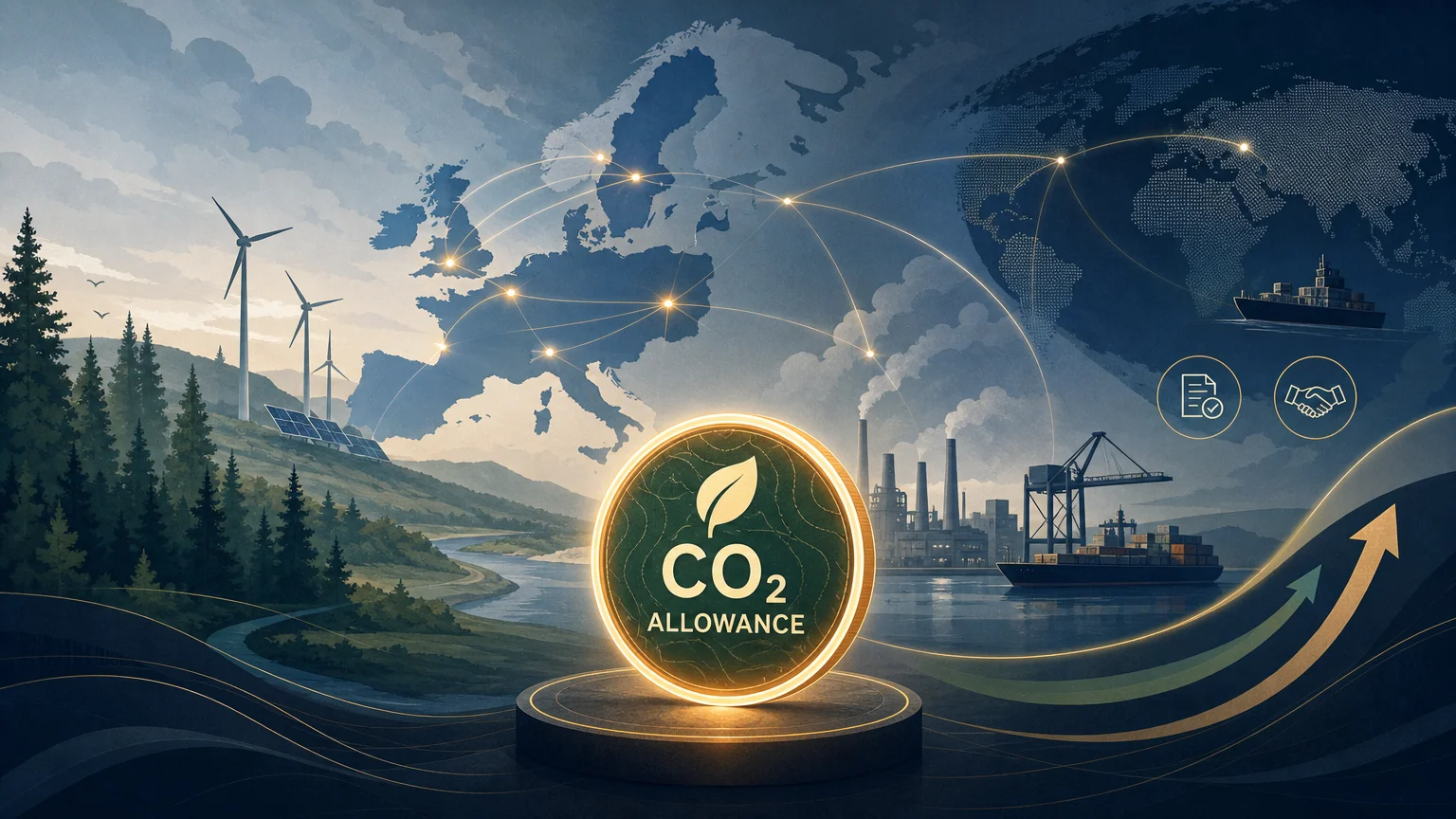
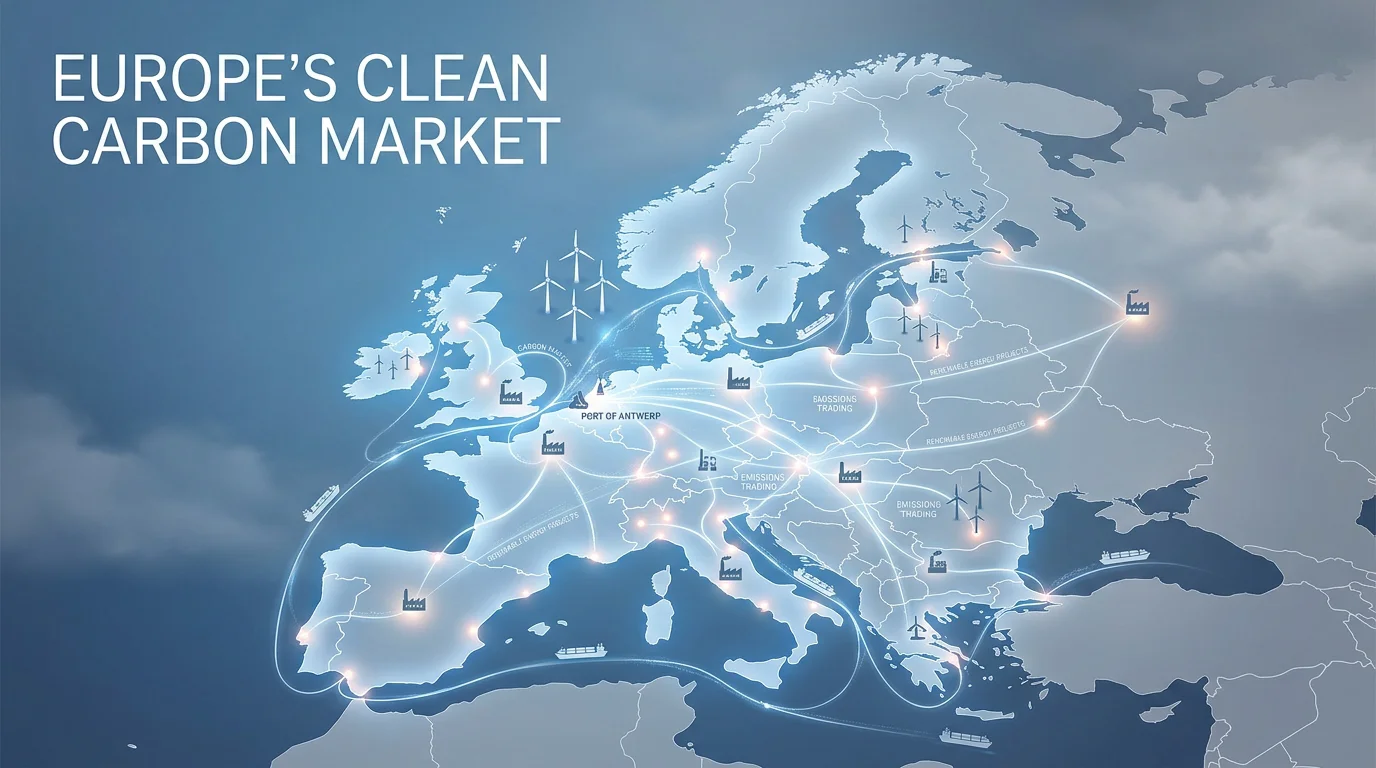

Summary: The EU ETS is Europe's cap-and-trade carbon market, requiring polluters to hold one allowance per tonne of CO2. It covers roughly 40% of EU emissions.
Carbon now carries a real, measurable cost in Europe. By mid-2025, the system had raised hundreds of billions of euros while pushing industrial emissions steadily downward. For anyone new to climate policy, understanding the EU Emissions Trading System can feel daunting, yet the core idea is remarkably straightforward. To build a solid foundation, you may wish to consult The EU ETS Explained, our detailed companion resource.
The mechanism works by attaching a price to pollution, so that reducing emissions becomes a financial decision rather than a moral one. European Commission analysis confirms the system has reshaped how energy and industry operate across the continent. This guide breaks the essentials into plain language.
What Is the EU ETS?
The European Union Emissions Trading System is a market that puts a price on greenhouse gas pollution, which is exactly why newcomers so often search for the eu ets explained simply. Launched in 2005, it was the world's first major carbon market of its kind. Reference sources note that as of 2026 the system covers around 40% of the EU's greenhouse gas emissions.
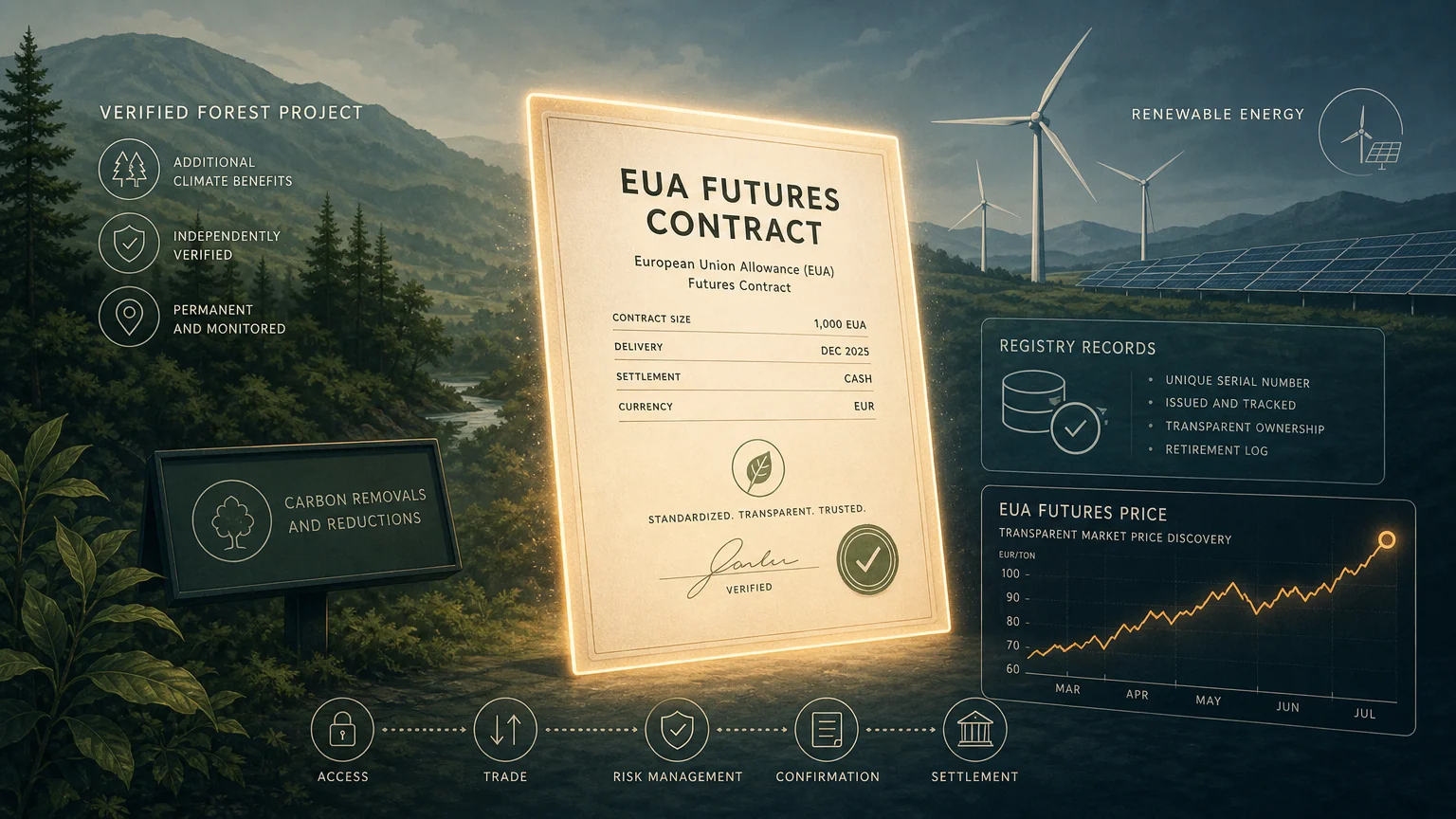
The concept rests on a simple rule. Every company within its scope must hold one emission allowance, known as an EUA, for each tonne of CO2 equivalent it emits during the year. Companies buy these allowances, receive some for free, or trade them with one another, then surrender enough to cover their verified emissions. If they emit more than they hold, heavy penalties apply.
Because the total number of allowances is fixed and shrinks over time, pollution becomes progressively scarcer and more expensive. That scarcity is the engine that drives decarbonisation.
How Cap and Trade Works in the EU ETS
Imagine the atmosphere as a shared bucket with a strict limit on what can be poured in. That limit is the cap. The European Union sets a maximum quantity of emissions allowed each year, then issues allowances up to that ceiling. The cap falls annually, tightening the supply of allowances.
The "trade" half of the phrase matters just as much. Companies that cut emissions cheaply end up with spare allowances, which they can sell to those who find reductions harder. This creates a live carbon price and rewards the most efficient reductions first. If you would like a deeper walkthrough of the mechanics, How Cap and Trade Schemes Work lays out each step.
Every transaction, surrender, and free allocation is recorded in the Union Registry, the official European ledger for allowances. The result is a transparent market where the price reflects genuine supply and demand.
Who and What the System Covers
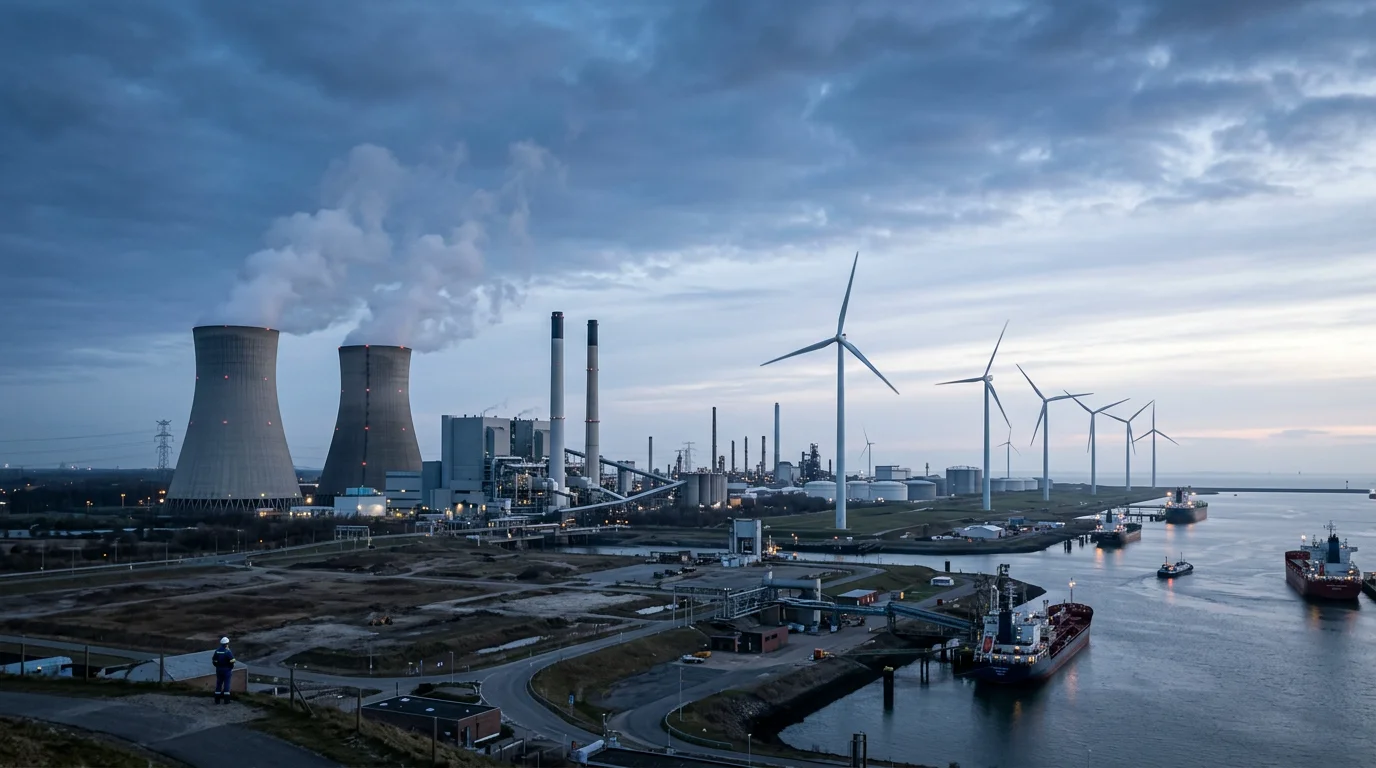
The EU ETS does not apply to every emitter. It targets large, energy-intensive activities where measurement is reliable and reductions are significant.
- Power generation and heat production
- Energy-intensive industry such as steel, cement, aluminium, glass, and chemicals
- Commercial aviation within the European Economic Area
- Maritime transport, phased in from 2024
Shipping's inclusion has followed a gradual schedule. ICAP reports that shipping companies must surrender allowances equal to 40% of verified 2024 emissions and 70% for 2025, with the scope widening from 2026 to include methane and nitrous oxide. Heavy industry still receives a share of free allowances to protect it against competitors abroad, though that support is being scaled back. For a complete breakdown of obligations, see What Are the Rules in the EU ETS?
What Carbon Allowances Cost Today
Price is where the abstract system becomes concrete. In June 2026, carbon permits traded at around 81 euros per tonne, near their highest levels of the year. This is a world away from the early days, when oversupply once pushed prices close to zero.
The recovery was no accident. The European Commission notes that average carbon prices climbed to roughly EUR 80 in 2022-2023 before easing to EUR 65 in 2024, then fluctuating between EUR 60 and EUR 80 across 2025. Reforms, a tighter cap, and the Market Stability Reserve have all helped lift the signal. Higher, more predictable prices give companies a clearer reason to invest in cleaner technology.
For financial and compliance participants, tracking these movements in real time is essential. Our EU ETS Trading Tools for Traders and Corporates provide live pricing and configurable alerts so that you never miss a material shift.

The 2026 Reforms Reshaping the Market
The system is not static. Several major changes are landing right now, in 2026, and they matter for every participant.
First, the cap has been sharpened. The European Commission states that the ceiling has been tightened to cut emissions by 62% by 2030 compared to 2005 levels, with free allocation to aviation removed from 2026.
Second, the Carbon Border Adjustment Mechanism, or CBAM, enters its definitive stage. It applies the EU carbon price to imports of goods such as steel, cement, aluminium, fertilisers, and hydrogen, gradually replacing free allowances so that domestic and foreign producers face comparable costs.
Third, a separate system called ETS2 is being prepared for road transport and buildings, with obligations falling on fuel suppliers rather than households. To understand how these parallel markets connect, our overview of How Emissions Trading Systems Work is a useful reference.
Why the EU ETS Matters
Does putting a price on carbon actually reduce pollution? The evidence suggests it does. ICAP data show that the system delivered a 5.7% year-on-year drop in emissions from stationary sources in 2024, with installations already sitting around 50% below 2005 levels and on track for the 2030 target.
The financial scale is equally striking. According to the Commission, the EU ETS had raised EUR 245 billion in revenue by mid-2025, funds that flow largely to member states for climate investment and social support. A dedicated Social Climate Fund will mobilise tens of billions more to cushion vulnerable households as carbon pricing expands.
For market participants, access is a practical question of cost and flexibility. The table below compares a traditional exchange approach with our platform.
| Feature | Traditional carbon exchange | Our platform |
|---|---|---|
| Minimum trade size | Typically 1,000 EUA lots | From 1 EUA (1 tonne of CO2) |
| Live pricing | Often delayed or limited | Transparent real-time monitoring |
| Automation | Varies | API access and configurable alerts |
| Risk controls | Varies | Pre-trade risk controls |
| Cash protection | Varies | Guaranteed up to 100 k€ by the FGDR |
Smaller trade sizes and transparent pricing lower the barrier to participation for both compliance entities and financial firms.
Bringing It All Together
At its heart, the EU ETS explained in plain terms is a shrinking cap on pollution combined with a tradable permit for every tonne of CO2. Prices near 81 euros per tonne in 2026 show that carbon is no longer free, and the system has already cut covered emissions by roughly half since 2005. Whether you operate an installation or trade allowances professionally, understanding the cap, the price signal, and the 2026 reforms is now essential. To act on that knowledge, you need infrastructure built for speed, transparency, and precise risk control. To explore this in a live setting, request access to our demo environment for traders and corporates and see how modern carbon trading works.
Frequently Asked Questions
What is one EU allowance worth?
One EUA gives the holder the right to emit one tonne of CO2 equivalent. In June 2026, allowances traded at around 81 euros per tonne, though the price moves daily with supply and demand.
Who has to comply with the EU ETS?
Power plants, energy-intensive industry, intra-European aviation, and maritime transport above defined thresholds are covered. These operators must monitor emissions and surrender enough allowances each year, or face fines.
How can financial firms trade EU allowances efficiently?
Professional participants need real-time pricing, small trade sizes, and automation. Our trading tools for traders and corporates allow trades from a single EUA, with API access and pre-trade risk controls for precise exposure management.