


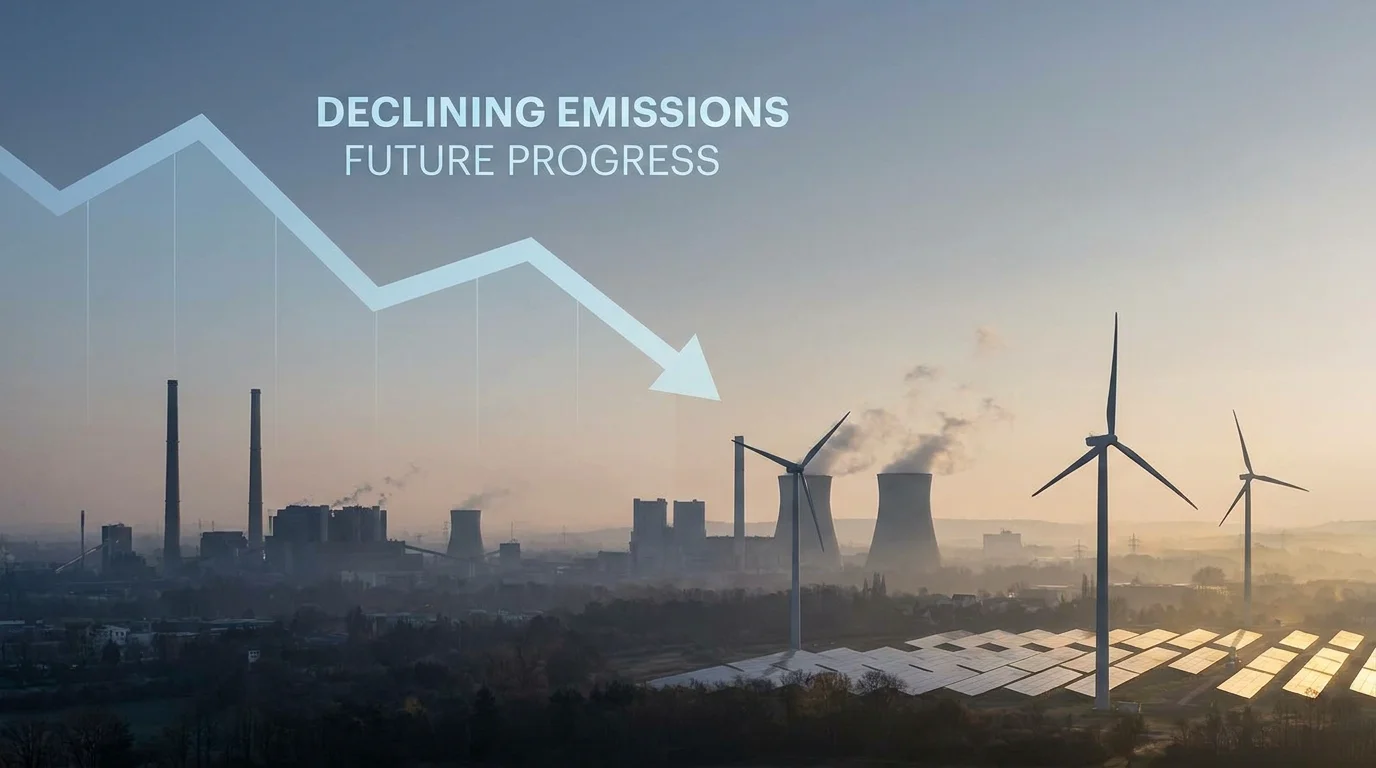

In 2026, approximately 30 percent of global greenhouse gas emissions are covered by some form of carbon pricing mechanism. That figure has grown steadily from just 5 percent in 2005, driven largely by the expansion of cap and trade schemes across both developed and emerging economies. For organizations seeking to understand how these systems create financial incentives for decarbonization, the mechanics behind them are essential knowledge. Our guide to emissions trading systems explained covers the broader landscape; this article focuses specifically on the inner workings of cap and trade.
Whether you are a compliance officer at an industrial facility, a portfolio manager evaluating carbon exposure, or a policy analyst tracking global climate regulation, understanding how does a cap and trade scheme work will help you navigate a market that now spans 14 of the G20 nations. Below, we break down the core components, the economic logic, the compliance cycle, and the practical implications for market participants.
The Core Principle: Setting a Hard Cap on Emissions
Every cap and trade system begins with a single policy decision: setting a maximum volume of greenhouse gas emissions that regulated entities may collectively produce. This ceiling, known as the emissions cap, is typically expressed in tonnes of carbon dioxide equivalent (CO₂e). The government or regulatory authority determines the cap based on scientific targets and national climate commitments, then divides it into individual units called allowances.
Each allowance represents the right to emit one tonne of CO₂e. According to the U.S. Environmental Protection Agency, the cap "establishes the maximum allowable emissions from a group of emissions sources, and it sets the emissions reduction goal." The cap is not static. It declines on a predetermined schedule, tightening the supply of allowances year after year and driving aggregate emissions downward.
This declining trajectory is the mechanism that aligns market activity with climate targets. In the EU Emissions Trading System, for example, the annual cap reduction factor has been increasing across successive phases. Other jurisdictions calibrate their reductions differently, but the principle remains consistent: a shrinking cap forces the regulated economy to decarbonize progressively.
How Allowances Are Distributed
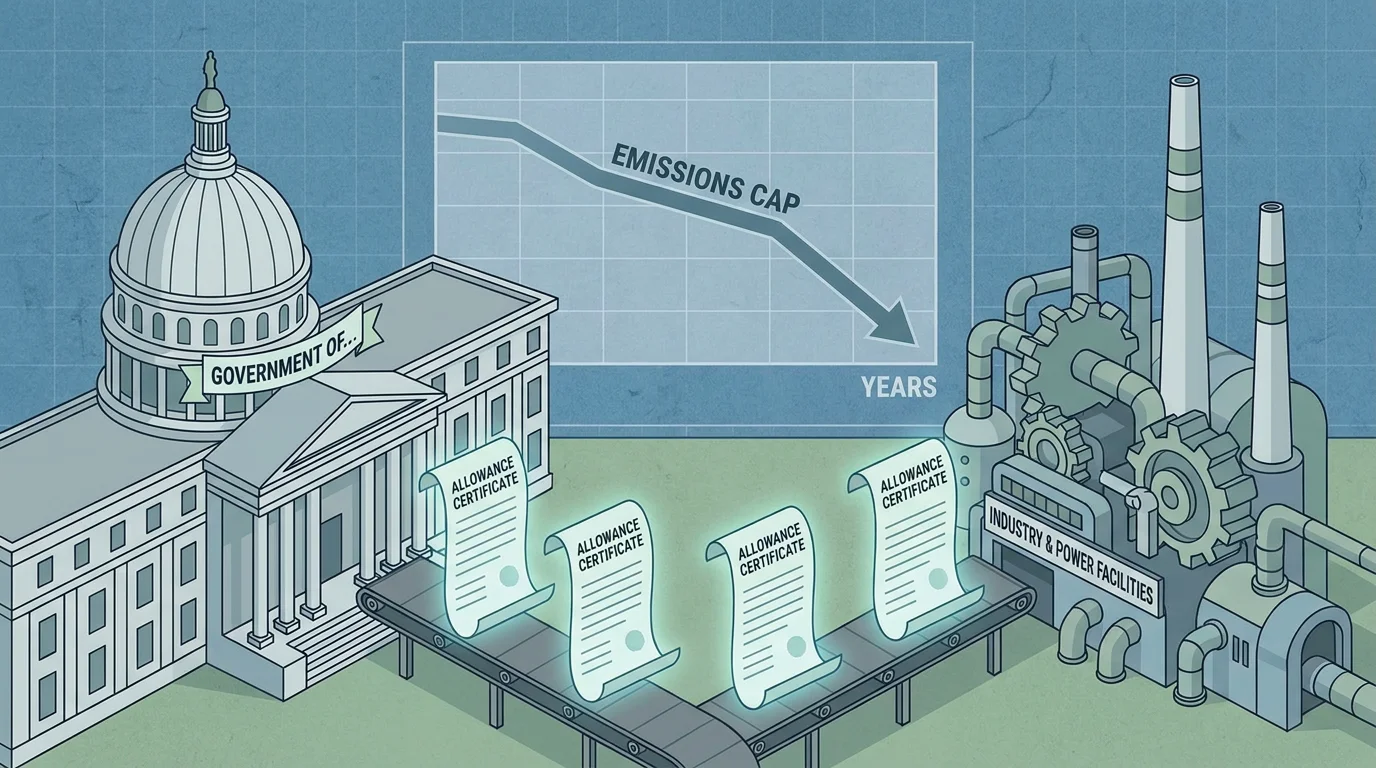
Governments have two primary methods for distributing allowances: auctioning and free allocation. In an auction, companies bid for allowances, generating public revenue that can fund climate programs and social measures. Free allocation, by contrast, grants allowances to regulated entities at no upfront cost, often using historical emissions data or industry benchmarks as a basis.
Most mature systems use a combination of both approaches. The EU ETS, for instance, auctions the majority of allowances for the power sector while providing EU carbon market allowances for free to industries at risk of carbon leakage (relocating production to jurisdictions without carbon pricing). As noted by the OECD's 2025 Effective Carbon Rates report, "free allowance shares are decreasing in many systems" while "auctioning is taking on a greater role."
The distribution method matters because it directly affects the cost burden on regulated companies and the revenue available to governments. ETS revenues reached a new record of nearly USD 80 billion in 2025, according to the ICAP 2026 Status Report. These funds are increasingly reinvested into clean energy transitions and household support programs.
The Trading Mechanism: Where Economics Meets Environment
What distinguishes cap and trade from a simple emissions limit is the trading component. Once allowances are distributed, companies may buy, sell, or bank them. This creates a secondary market with a price signal that reflects the collective cost of reducing emissions across the economy.
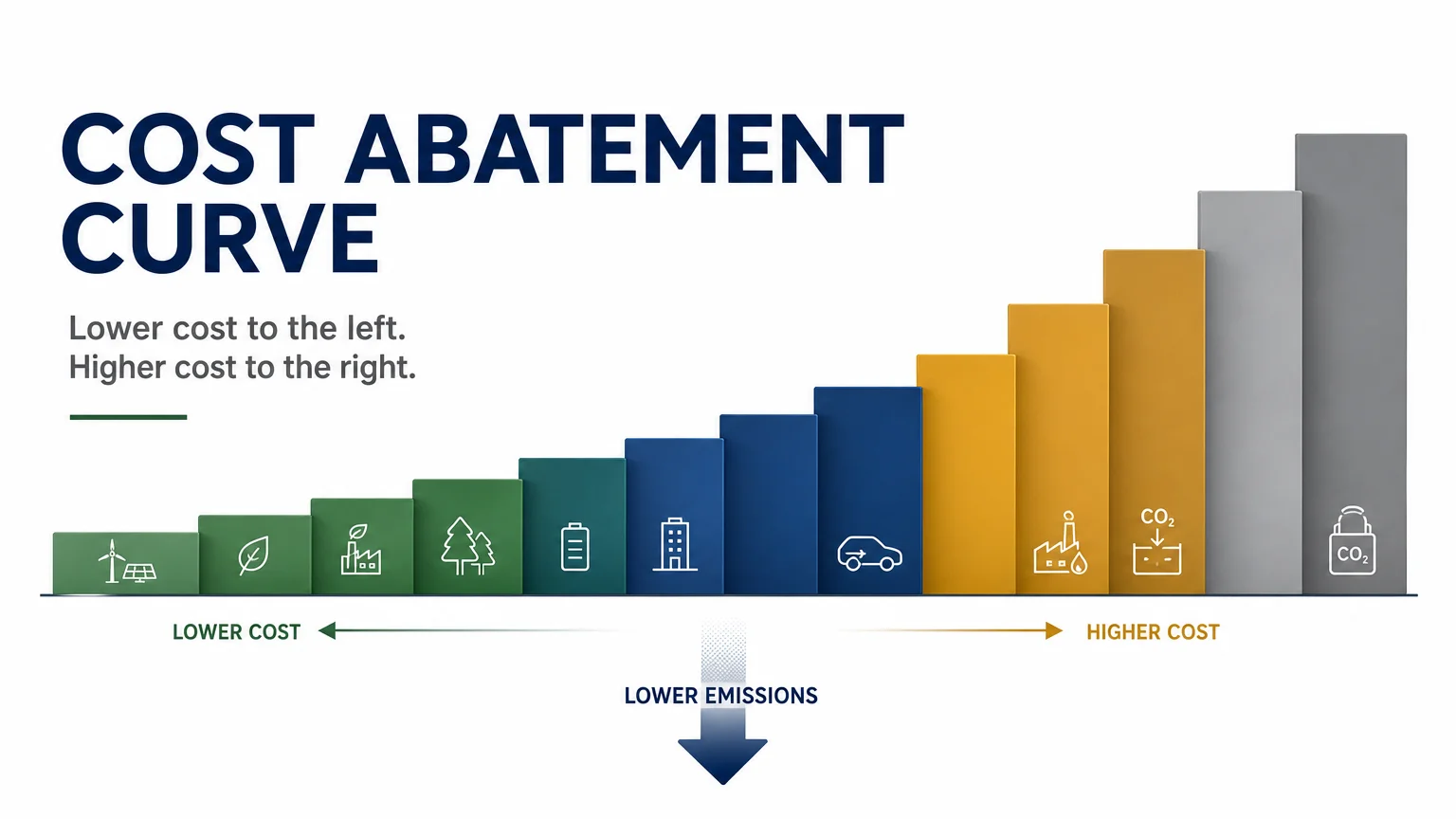
Consider two factories. Factory A can reduce its emissions cheaply by switching fuel sources. Factory B faces much higher abatement costs due to its industrial process. Under cap and trade, Factory A will cut emissions below its allocation and sell surplus allowances to Factory B. Factory B pays less than the cost of its own abatement, and Factory A earns revenue from its efficiency. Total emissions remain at or below the cap, but the reductions occur where they are least expensive.
This economic flexibility is why cap and trade is often described as a cost-effective approach. The market discovers the optimal price for carbon without the government prescribing specific technologies or reduction methods. For a deeper understanding of the reduction strategies companies deploy in this context, our resource on emission abatement strategies provides practical guidance.
Compliance Cycles and Surrender Obligations
Regulated entities do not trade allowances in a vacuum. They operate within structured compliance periods, during which they must monitor, report, and verify their emissions. At the end of each period, they surrender enough allowances to cover their verified emissions. Failure to do so triggers financial penalties.
Most programs use multi-year compliance windows combined with annual partial surrender obligations. This structure reduces price volatility by giving companies time to plan. The EU ETS, for example, requires annual surrender by September 30 of the year following emissions, while California uses three-year compliance periods with annual partial obligations. These design choices directly shape how companies manage their allowance portfolios.
Banking (saving surplus allowances for future use) is permitted in most systems, providing an incentive to reduce emissions earlier than required. Borrowing from future allocations is far less common, as it can create supply constraints down the line. Understanding the specific rules of the EU ETS is critical for any compliance entity operating within Europe.
Price Stability and Market Integrity Measures
A pure market can produce extreme price swings. Too low a carbon price fails to incentivize abatement; too high a price risks economic disruption. To address this, most cap and trade schemes incorporate market stability mechanisms.
Common instruments include price floors (minimum auction prices), price ceilings or containment reserves (additional allowances released when prices hit a threshold), and market stability reserves that adjust the supply of auctioned allowances based on the total number in circulation. The EU's Market Stability Reserve, introduced in 2019 and strengthened in 2023, automatically absorbs or releases allowances to maintain a balanced market.
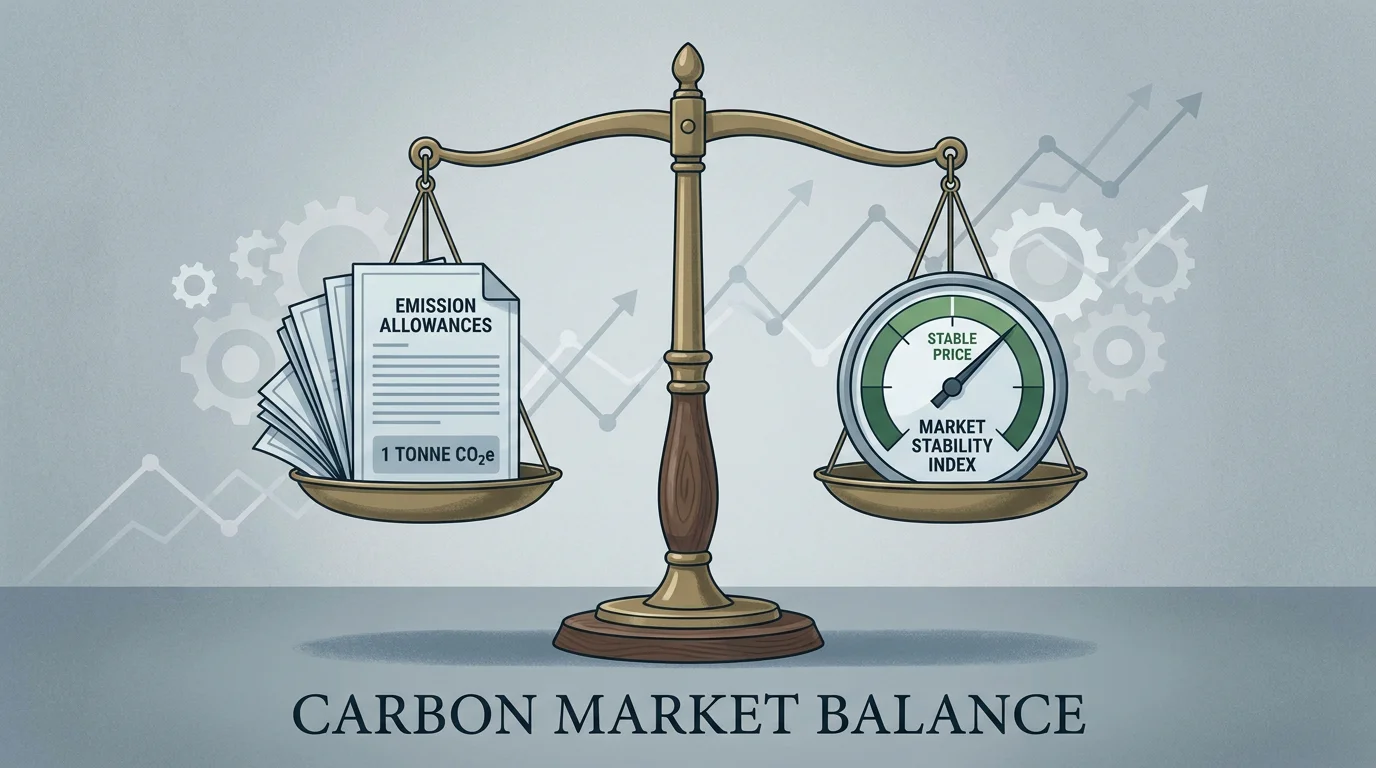
Market integrity also depends on robust registries that track every allowance from issuance to surrender. Independent oversight bodies monitor for fraud and manipulation. In Europe, allowances are recorded in the European Union Transaction Log. In the United States, the Commodity Futures Trading Commission provides additional oversight of secondary carbon markets. These institutional safeguards ensure that each tonne of emissions reduction is real and accounted for only once.
Global Expansion: Cap and Trade in 2026
The reach of emissions trading has expanded dramatically over the past two decades. Three new national-level systems are launching in 2026 (Japan, India, and Vietnam), reflecting what the ICAP describes as the spread of emissions trading into diverse economies. An ETS is now in place in 14 of the G20 nations, positioning carbon markets at the center of global decarbonization strategies.
In 2026, approximately 30 percent of global greenhouse gas emissions are covered by some form of carbon pricing mechanism, according to the Inter-American Center of Tax Administrations. Coverage under these systems has more than doubled in recent years, reaching approximately 22 percent of global emissions for ETS specifically, with the remainder accounted for by carbon taxes.
Several notable developments are shaping the landscape. China has issued landmark guidelines to transition its national ETS to an absolute cap by 2027 and progressively expand coverage to all major industrial emitters. California has legislatively renamed its program to Cap-and-Invest and authorized it through 2045. The EU's CBAM has entered its compliance phase, and the UK is following suit, acting as a catalyst for broader carbon pricing ambitions in trading partner countries.
Cap and Trade vs. Carbon Tax: Choosing the Right Instrument
Policy debates often frame cap and trade against carbon taxes as competing approaches. In practice, each instrument offers distinct advantages. A cap and trade system provides certainty about emissions outcomes (the cap guarantees a maximum volume) but allows the price to fluctuate. A carbon tax provides price certainty but does not guarantee a specific emissions level.
Many jurisdictions are choosing hybrid approaches. Carbon taxes remain strong in 2026, covering approximately 5 to 6 percent of global greenhouse gas emissions, primarily from fossil fuel use in transportation and construction. Meanwhile, some newer systems, such as Indonesia's "cap-tax-and-trade" model, blend elements of both approaches to suit domestic circumstances.
For organizations operating across multiple jurisdictions, the growing patchwork of carbon pricing creates both compliance complexity and strategic opportunity. Firms that invest in emissions monitoring, allowance management, and trading infrastructure position themselves to optimize costs across regulatory boundaries.
Practical Implications for Market Participants
Whether you are a compliance entity required to surrender allowances or a financial participant seeking exposure to carbon markets, several practical considerations apply. First, real-time price visibility is essential. Carbon allowance prices can move significantly in response to policy announcements, energy market dynamics, or macroeconomic shifts. Second, flexible trade execution matters. The ability to enter or exit positions quickly, in sizes that match your actual exposure, can meaningfully reduce compliance costs.
Traditional carbon exchanges have historically required large minimum trade sizes (often 1,000 allowances per lot), limiting access for smaller operators and creating barriers for precise portfolio management. We have designed our platform to address this: you can trade from a single EU Allowance, equivalent to one tonne of CO₂, with transparent live pricing and API-enabled automation. For organizations that need trading and compliance solutions for corporates, this flexibility can make a material difference in cost management.
Third, regulatory awareness is non-negotiable. As the cap and trade landscape evolves, with new systems launching, existing ones tightening, and cross-border mechanisms like CBAM reshaping trade flows, staying informed is a competitive advantage. Participants who treat carbon as a strategic asset class, rather than a compliance afterthought, consistently outperform those who do not.
In a market where cap and trade schemes now cover the majority of the global economy by GDP, understanding the mechanics is no longer optional. The declining cap guarantees that allowances will become scarcer, and the trading mechanism ensures that prices will reflect the true cost of emissions. For any organization subject to these rules, or any investor evaluating carbon-exposed assets, the time to build capability is now. We offer competitive fees, real-time price monitoring, and pre-trade risk controls designed for professional carbon market participants. To explore how our platform supports your trading needs, discover our trading and compliance solutions for corporates.
Frequently Asked Questions
What is the difference between a cap and trade scheme and an emissions trading system?
The terms are often used interchangeably. "Cap and trade" emphasizes the two core mechanics (the emissions ceiling and the market for allowances), while "emissions trading system" (ETS) is the broader regulatory term. In practice, most ETSs, including the EU ETS and California's program, operate on cap and trade principles.
How are carbon allowance prices determined in a cap and trade market?
Prices are set by supply and demand. The government controls supply through the cap and allocation decisions. Demand depends on companies' emissions levels and abatement costs. When the cap tightens or abatement costs rise, prices increase. Market stability mechanisms, such as price floors and reserves, also influence pricing. Platforms like ours provide real-time price monitoring to help participants track these movements.
Can small and mid-sized companies participate in carbon trading?
Yes. While cap and trade regulations primarily target large emitters, smaller companies can participate as voluntary market participants or through intermediaries. Some platforms have lowered entry barriers significantly; for example, we enable trading from a single EU Allowance (one tonne of CO₂), compared to the traditional 1,000-unit lot size on legacy exchanges.


Let’s connect
Do you want more information about what we do?