

Summary: Carbon leakage occurs when strict EU climate costs push carbon-intensive production abroad, raising emissions elsewhere. Studies estimate a leakage rate near 19% without safeguards.
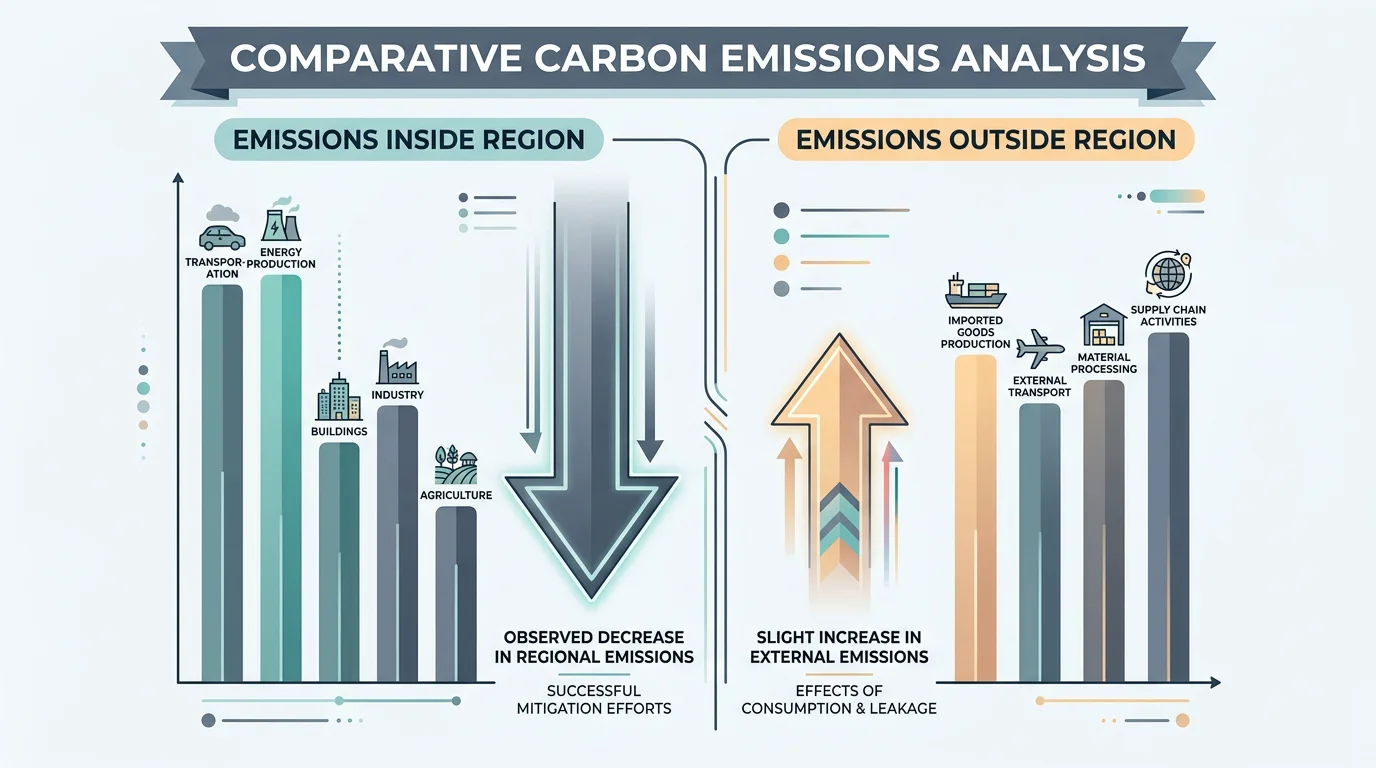
Imagine cutting 175 million tonnes of carbon dioxide inside Europe, only to see 34 million tonnes reappear beyond its borders. That trade-off sits at the heart of one of the most debated risks in European climate policy. Understanding what carbon leakage means in the EU ETS is essential for anyone exposed to the carbon market, and our overview of the EU ETS rules provides useful background.
Put simply, the question of what is carbon leakage in the eu ets concerns whether a stringent carbon price at home merely relocates emissions rather than eliminating them. According to OECD modelling, the removal of free allowances alone would drive most of that risk. This guide explains the concept, its causes, and the tools designed to contain it in 2026.
Understanding carbon leakage in the EU ETS
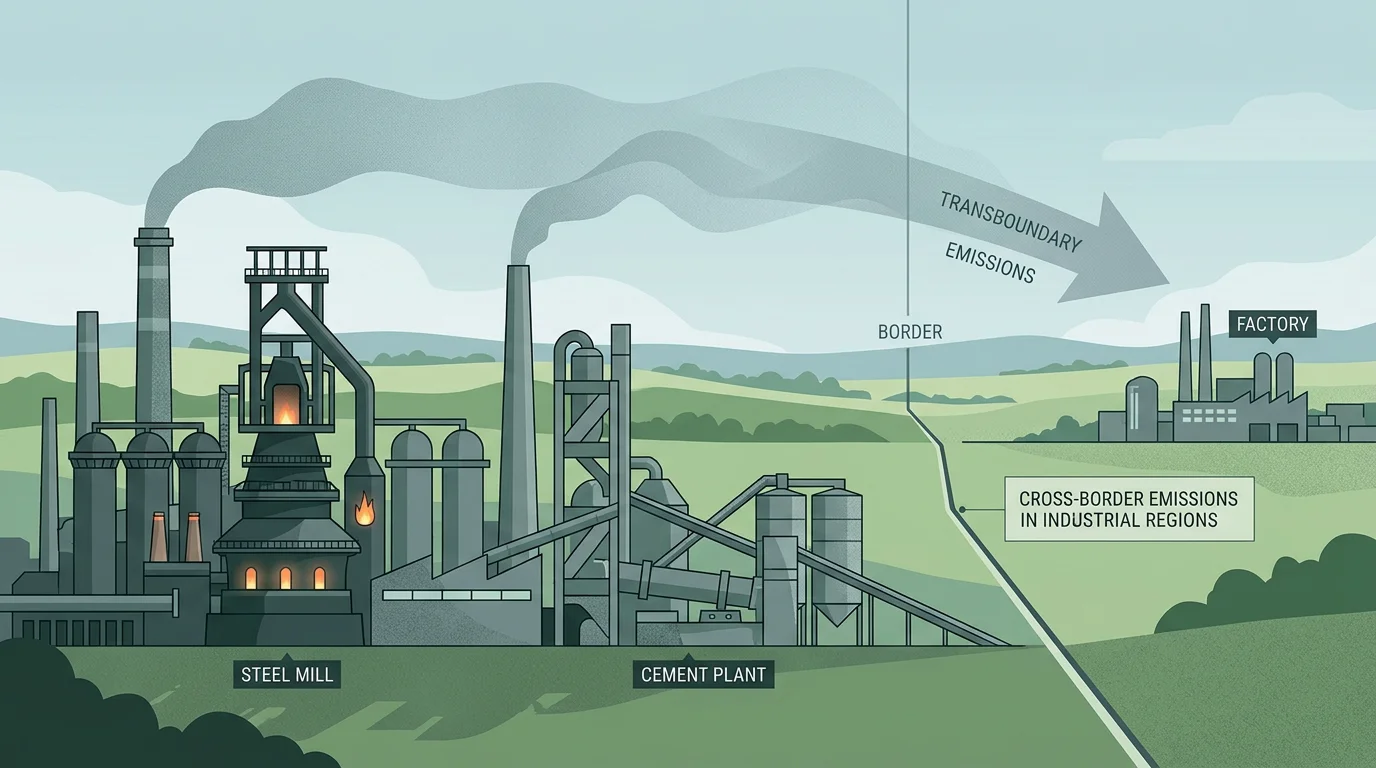
Carbon leakage describes a specific unintended outcome of climate regulation. It happens when stringent policies in one region cause emissions to rise in regions with weaker rules, as production shifts to avoid compliance costs. The net effect can offset the reductions achieved at home.
In the context of the European system, the definition is precise. Carbon leakage refers to an increase in emissions outside the EU caused by the relocation of carbon-intensive production, driven by the domestic carbon price. It is typically measured as the ratio of emissions rising abroad to reductions secured within the bloc.
The concern matters because the EU Emissions Trading System is the cornerstone of European decarbonisation. If a rising carbon price simply exports factories and their emissions, global climate goals are undermined even as European figures improve. For a fuller picture, see our guide to Europe's carbon market.
What causes carbon leakage?
Three drivers are usually identified. Each reflects a different way that unequal carbon costs distort competition across borders.
- Regulatory disparities: Carbon prices vary widely across jurisdictions. Where compliance is cheaper elsewhere, firms have an incentive to move operations.
- Trade exposure: Industries competing intensely on global markets, such as steel and cement, are the most vulnerable, since they cannot easily pass costs on to buyers.
- Cost competitiveness: Lower labour, energy, and regulatory costs abroad can combine with carbon pricing to make relocation attractive.
These motivations often overlap, which makes leakage difficult to isolate. A factory relocating chiefly for cheaper wages is not the same phenomenon as one leaving because of an ambitious cap-and-trade scheme, even though the emissions outcome may look similar.
Does the EU ETS actually cause carbon leakage?
The honest answer is that the evidence remains contested. The theoretical literature has long predicted meaningful leakage rates for energy-intensive, trade-exposed sectors. Empirical confirmation, however, has been harder to establish across the earliest trading phases.
Several academic studies do document a link between the EU cap-and-trade system and industrial relocation, particularly where carbon costs weigh most heavily. Yet peer-reviewed work published in late 2025 concluded that direct empirical evidence for leakage stays comparatively sparse, even where the risk is theoretically strong.
Modelling helps quantify the potential scale. The OECD simulation found that, without corrective measures, every tonne of carbon dioxide saved in the EU would be accompanied by roughly 0.19 tonnes emitted outside it. That corresponds to a leakage rate of about 19%, and the analysis attributes more than two-thirds of it to the removal of free allowances.
How free allowances have shielded EU industry
For years, the primary defence against leakage has been the free allocation of allowances. Sectors judged to face a significant risk received permits at no cost, preserving their competitiveness while retaining an incentive to abate emissions at the margin.
The scale of this protection is substantial. According to the European Commission, free allowances accounted for nearly half of all emissions from ETS1 stationary installations in 2024. Eligibility has been concentrated on emission-intensive and trade-exposed industries since 2013.
Free allocation is not a permanent fixture. It is being phased out gradually, in parallel with a new border mechanism, so that protection shifts from a domestic subsidy toward a levelling of costs on imports. Understanding this transition is central to grasping the direction of European carbon policy.
CBAM: the EU's border defence against leakage
The Carbon Border Adjustment Mechanism, or CBAM, is the flagship tool designed to replace free allowances over time. It applies the EU carbon price to imports of selected carbon-intensive goods, so that foreign producers face costs comparable to those inside the bloc.
The mechanism entered its definitive phase in 2026. As set out by the European Commission, it initially covers imports of cement, iron and steel, aluminium, fertilisers, electricity, and hydrogen, the sectors judged most exposed to leakage. When fully phased in, it is expected to capture more than half of the emissions in ETS-covered sectors.
Modelling suggests the design works as intended. The OECD analysis found that CBAM reverses much of the projected leakage, saving roughly 0.15 tonnes of carbon dioxide outside the EU for every tonne saved within it, as imports are rerouted toward cleaner sources. That said, researchers caution that practices such as resource shuffling could dilute the effect in practice.
The phase-out timeline and what changes in 2026
The transition is deliberately gradual to give industry time to adapt. Free allocation and CBAM move in opposite directions on a coordinated schedule, and 2026 marks the first year both effects are felt together.
According to the International Carbon Action Partnership, free allocations for eligible producers in CBAM-covered sectors are being reduced by 2.5% annually across 2026 and 2027. The same source notes a legislative proposal to extend CBAM to around 180 additional steel- and aluminium-intensive downstream products, with implementation from 2028, to close remaining leakage gaps.
Carbon prices frame the whole discussion. The European Commission reported that ETS1 prices fluctuated between EUR 60 and EUR 80 during 2025, and the added carbon cost for industry from the phase-out is expected to rise only modestly in the near term. For the parallel road-transport and buildings system, consult our EU ETS 2 compliance guide.
What carbon leakage means for market participants
For compliance operators and financial participants alike, leakage policy is not an abstraction. It shapes allowance supply, price trajectories, and the cost of hedging exposure. As free allocation shrinks, more installations will need to source allowances on the market.
The table below summarises how the two safeguards compare.
| Feature | Free allowances | CBAM |
|---|---|---|
| Mechanism | Permits granted at no cost to EU producers | Carbon price applied to imports |
| Status in 2026 | Being reduced by 2.5% per year | Definitive phase begins |
| Leakage channel addressed | Domestic production cost | Import competition |
| Direction | Phasing out | Phasing in |
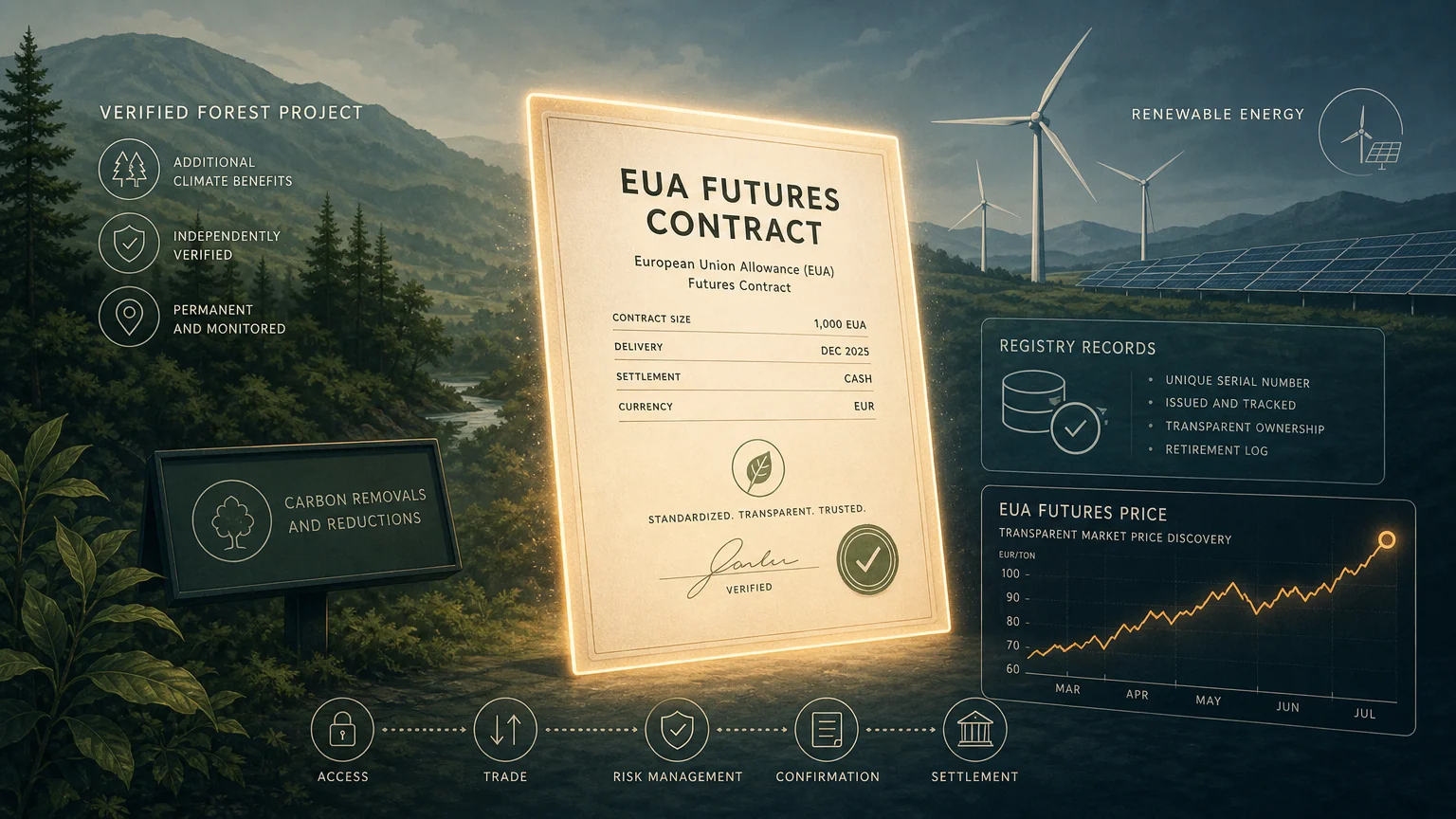
These shifts increase the value of fast, transparent, and flexible market access. We operate a programmable exchange for trading EU Allowances in spot and derivatives form, with real-time pricing, configurable alerts, and pre-trade risk controls. We also allow trading from a single EUA rather than a traditional lot of 1,000, which lowers the barrier for smaller and more precise positions.
Conclusion
The debate over carbon leakage in the EU ETS turns on a simple worry: that Europe might export its emissions rather than remove them. The most striking figure remains the roughly 19% leakage rate that modelling attributes largely to the withdrawal of free allowances, a risk the CBAM is designed to reverse. As free allocation declines through 2026 and the border mechanism takes over, allowance demand and price signals will grow more consequential for every participant. Sound decisions depend on reliable execution and clear, live pricing, which is exactly what our exchange platform is built to deliver. To go deeper into the fundamentals, read our plain-language EU ETS guide.
Frequently Asked Questions
Is there proof that the EU ETS causes carbon leakage?
The evidence is mixed. Theoretical models predict meaningful leakage for energy-intensive sectors, yet direct empirical proof remains limited across the trading phases studied so far.
How does CBAM prevent carbon leakage?
CBAM applies the EU carbon price to imports of covered goods, so foreign producers face comparable costs. Modelling indicates it reverses much of the leakage that removing free allowances would otherwise cause.
How can market participants track carbon prices in real time?
Live monitoring is essential as free allocation phases out. Our exchange platform offers real-time price monitoring, configurable alerts, and API access, allowing you to follow allowance movements and manage exposure precisely.