



On June 18, 2026, TTF gas fell to approximately €41 per MWh, driven by easing geopolitical tensions around the Strait of Hormuz. A single benchmark, anchored in the Netherlands, now shapes energy costs, industrial strategy, and carbon pricing across the entire European continent. For any professional navigating European energy or emissions markets, the question "what is ttf gas" is not merely academic; it is foundational to understanding how wholesale gas prices ripple through electricity bills, manufacturing margins, and climate policy.
The Title Transfer Facility, or TTF, has become one of the most consequential price signals in global commodities. Its influence extends well beyond gas trading desks: it affects EU Emissions Trading System (EU ETS) dynamics, power generation economics, and long-term decarbonization strategies. In the sections below, you will find a thorough explanation of what TTF gas is, how it operates, what drives its price, and why it matters for participants across energy and carbon markets.
What Is the Title Transfer Facility (TTF)?
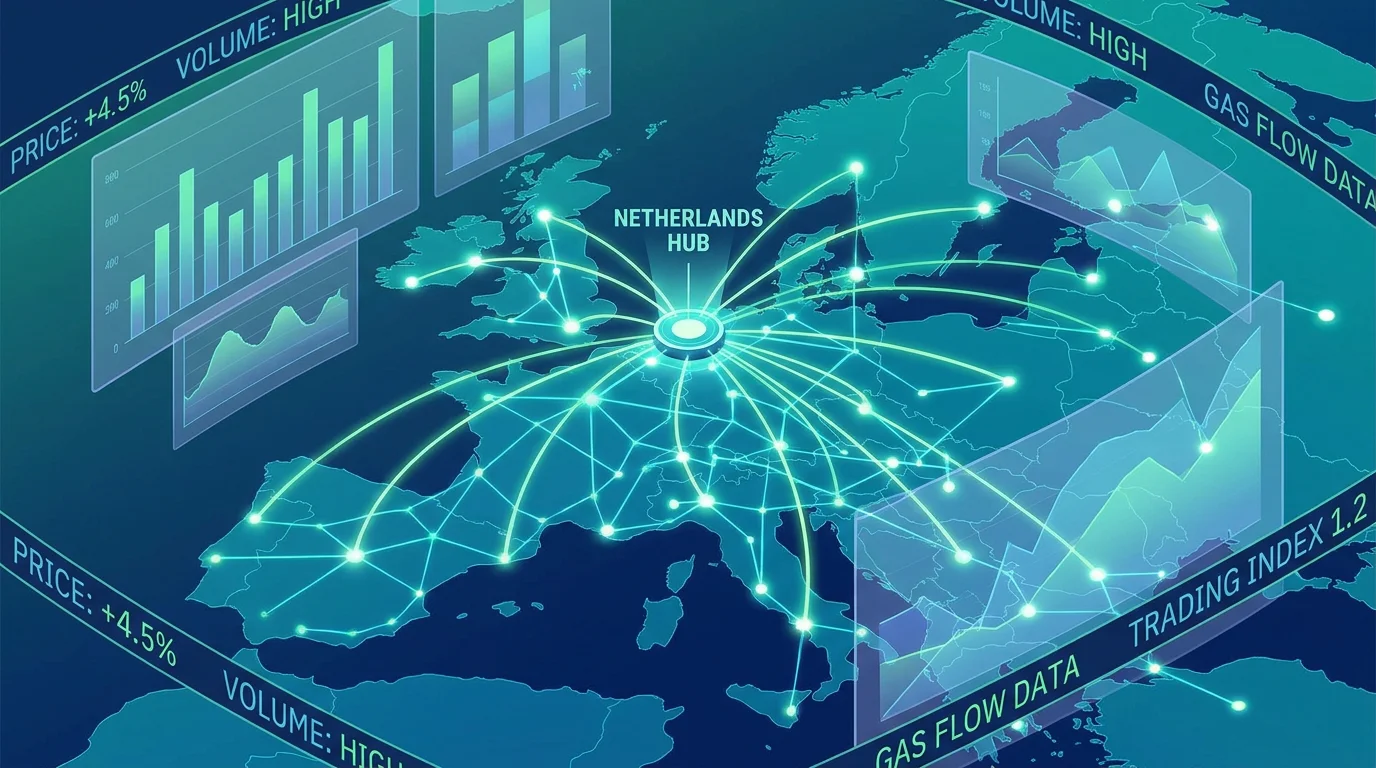
The Title Transfer Facility (TTF) is the leading European benchmark for wholesale natural gas prices. Unlike a physical pipeline, the TTF is a virtual marketplace where traders, energy suppliers, and large industrial consumers buy and sell natural gas. TTF prices are quoted in €/MWh and reflect the cost of one megawatt hour of natural gas delivered into the Dutch grid for next-day or month-ahead delivery.
Contracts are for physical delivery through the transfer of rights in respect of natural gas at the TTF Virtual Trading Point, operated by Gasunie Transport Services (GTS), the transmission system operator in the Netherlands. Set up by Gasunie in 2003, the facility was originally designed to facilitate trading within the Dutch gas network. Over the following two decades, it evolved into Europe's most liquid gas hub.
Its importance lies in its high liquidity and role as a transparent price reference, making it the standard for gas contracts across the continent, much like Brent Crude is for oil. Other national indices exist (such as the PSV in Italy, the PEG in France, or the NCG in Germany), but TTF has assumed the central benchmarking role for the European market.
How TTF Became Europe's Dominant Gas Benchmark
The Netherlands historically held one of Europe's largest reserves of natural gas. The Groningen gas field is the largest gas field in Europe and the major natural gas source in the Netherlands. In 2014, the first earthquake related to drilling the field occurred, and other seismic activities were also observed. Therefore, the Groningen field has drastically reduced its production output, and since then, natural gas production in the Netherlands has been in a trend of continuous decline.
Dutch TTF Gas is a leading European benchmark price as the volumes traded represent more than 14 times the amount of gas used by the Netherlands for domestic purposes. This extraordinary liquidity, far exceeding domestic consumption, is what transformed TTF from a local trading hub into a continent-wide reference. TTF has largely replaced the UK's NBP as the most liquid European gas trading hub.
The rise of liquefied natural gas (LNG) imports accelerated this shift. Since the 2022 energy crisis, TTF has gained even more importance as Europe reduced Russian pipeline gas imports and increased LNG imports. As Europe's supply mix reconfigured, TTF pricing became the anchor for virtually every wholesale gas transaction on the continent.
Where and How TTF Gas Is Traded
The TTF is the most traded gas hub in Europe. This high volume of transactions for both spot (immediate delivery) and futures (future delivery) contracts ensures that its price accurately reflects current supply and demand dynamics, making it a reliable benchmark.
Futures are available for trading on the Intercontinental Exchange Inc. (ICE). Specifically, the ICE Endex Dutch TTF Natural Gas Futures contract is the most widely referenced instrument. Wholesale gas trading at the TTF is also conducted over the counter (OTC) via interdealer brokers, and physical short-term contracts are handled through the PEGAS exchange.
TTF is the European benchmark (EUR/MWh) while Henry Hub is the US benchmark (USD/MMBtu). TTF prices are typically two to four times higher than Henry Hub due to European import dependency and transportation costs. This structural premium reflects the cost of shipping LNG across the Atlantic and Europe's heavier reliance on imports.
Key Drivers of TTF Gas Prices
Understanding what moves TTF natural gas prices is essential for anyone with exposure to European energy or carbon markets. Several interconnected factors shape the daily price.
- LNG supply and global competition: When Asian JKM LNG prices rise above European TTF, LNG cargoes are pulled toward Asia, tightening European supply and lifting TTF.
- Pipeline flows: Norwegian pipeline gas (approximately 100 bcm per year) is now Europe's largest single pipeline source. Maintenance shutdowns at Norwegian fields cause immediate TTF price spikes.
- EU storage regulation: EU gas storage must reach 90% by November 1 (EU regulation). Storage fill rates during the spring and summer injection season drive TTF forward curves and seasonal spreads.
- Weather and seasonal demand: Cold winters amplify heating demand, while hot summers can boost gas-for-power consumption as air conditioning loads rise.
- Geopolitical risk: Even without any physical disruption to supply, the risk premium embedded in gas markets can move power prices significantly.
In Q1 2026, these factors converged dramatically. The first quarter of 2026 was characterised by a sharp tightening of the European gas market balance, driven by a combination of colder-than-normal weather, accelerated storage withdrawals, and a major geopolitical shock in the Middle East that significantly disrupted global LNG supply. European gas prices reacted sharply, with TTF front-month contracts surging to above €70/MWh during March, according to Elenger's Q1 2026 gas market overview.
TTF Gas and Its Impact on European Electricity Prices
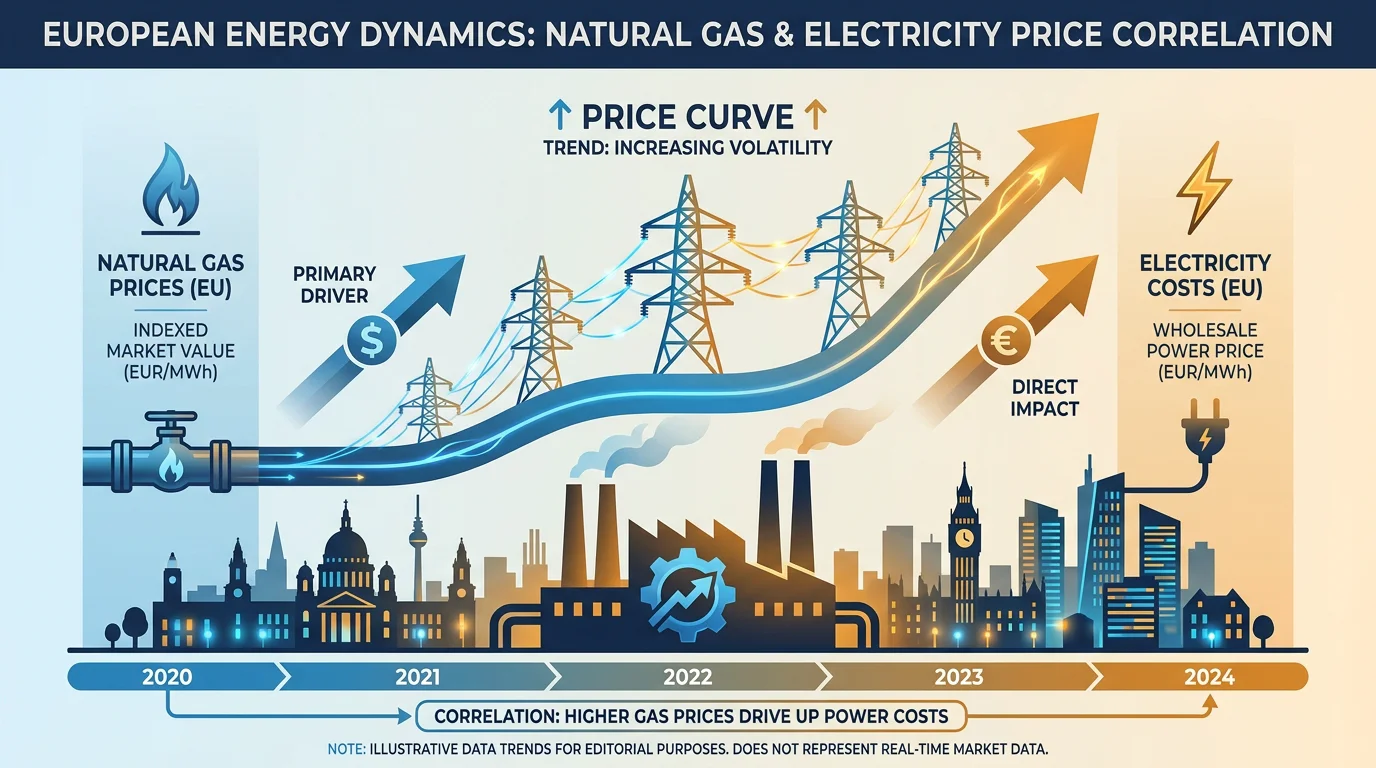
The TTF benchmark does not operate in isolation. Under Europe's marginal pricing system, gas-fired power plants frequently set the electricity price for entire markets. Despite gas accounting for only 18 to 20% of the EU's total electricity generation, it disproportionately drives power costs due to the region's marginal pricing market design.
When the TTF benchmark spikes, day-ahead electricity prices in gas-reliant nations like Italy and Germany soar, reaching €120 to €150/MWh. In contrast, countries with diverse energy mixes, such as France and Spain (Iberia), experience much more limited impacts, maintaining prices closer to €60 to €80/MWh. This analysis, published by the Institute for Energy Economics and Financial Analysis (IEEFA) in April 2026, underscores why TTF volatility has outsized economic consequences.
Gas accounts for roughly 18 to 20% of total electricity generation across the EU, down from around 25% before the 2022 energy crisis. In terms of electricity production, gas dependence has declined; in price formation, it has not. For industrial operators, this means that TTF price movements directly affect operating costs even if their own energy consumption does not rely on gas.
TTF Gas and the EU Carbon Market Connection
One of the most consequential links in European energy policy is the relationship between TTF gas prices and the EU Emissions Trading System. The price of TTF gas has a direct and significant relationship with the EU ETS. When gas prices are high, it can become more economical for power plants to burn coal, a more carbon-intensive fuel. This "fuel switching" from gas to coal increases the demand for European Union Allowances (EUA) to cover the higher emissions, often driving up the carbon price.
Imagine an electricity producer in Germany planning its power generation for the upcoming month. The company's analysts will closely monitor the TTF gas futures price versus the price of coal and the current cost of EUAs. If the TTF price is projected to be very high, making gas-fired power generation unprofitable, the company may decide to switch to its coal-fired plants instead. This decision directly increases their need to purchase EUAs, influencing the supply-demand balance of the carbon market.
This fuel-switching dynamic makes TTF gas pricing a critical input for anyone trading or managing compliance obligations under the EU ETS. Monitoring both TTF and EUA prices simultaneously enables more informed hedging, compliance planning, and risk management. For organizations that need efficient access to the carbon market, our programmable exchange for EU carbon allowances provides real-time pricing, configurable alerts, and pre-trade risk controls that complement a TTF-aware trading strategy.
TTF Price Trends in 2026: Volatility Persists
The trajectory of TTF prices in 2026 has been defined by geopolitical turbulence and supply chain disruption. The ICE Endex TTF front-month futures price closed Q4 2025 at 26.73 EUR/MWh but began to rise from the second week of January 2026. Prices exceeded 33 EUR/MWh during January, representing an increase of more than 20% compared to the end of Q4.
The conflict in the Middle East led to major disruptions in maritime logistics, including the effective closure of the Strait of Hormuz, a critical chokepoint for global LNG and oil shipments. The combination of physical supply disruptions and logistical constraints significantly increased risk premiums across energy markets. By March 2026, TTF front-month prices had surged above €70/MWh.
As of mid-June 2026, TTF Gas fell to 41.25 EUR/MWh on June 18, 2026, down 1.58% from the previous day, as reported by Trading Economics. European natural gas prices dropped more than 9% after the US and Iran agreed on a preliminary framework to end their conflict. The agreement includes the lifting of the US naval blockade on Iranian ports as well as the reopening of the Strait of Hormuz. The reopening of the strait would restore LNG shipments from the Persian Gulf, helping to alleviate supply concerns.
However, uncertainty remains. The rapid depletion of storage inventories during the first quarter has significantly increased the challenge for the upcoming injection season. Europe is now entering the summer period with one of the lowest starting points in recent years, implying a substantially higher refill requirement compared to previous cycles. These structural factors suggest that elevated volatility is likely to persist for the remainder of the year.
Why Understanding TTF Matters for Carbon Market Participants
For compliance entities under the EU ETS, banks, asset managers, and trading firms, TTF gas is not just an energy metric; it is a leading indicator for carbon price direction. The fuel-switching threshold (the price point at which utilities shift from gas to coal) directly affects EUA demand. Monitoring TTF forward curves alongside carbon futures enables a more nuanced view of the emissions market.
This interconnection also means that geopolitical events affecting gas supply, such as the 2026 Strait of Hormuz disruption, can cascade rapidly into carbon markets. European gas prices reflect a mix of factors: pipeline supply, LNG imports competing with Asian buyers for cargoes, EU gas storage levels relative to seasonal norms, weather-driven heating demand, geopolitical risk premia, and crude-oil-linked long-term LNG contracts. Each of these variables carries implications for EUA pricing.
Participants who can access both real-time gas data and carbon market execution tools are better positioned to manage this complexity. We designed our exchange infrastructure for EU allowances to integrate seamlessly with existing risk systems via API, allowing you to act on cross-market signals without delay.
In summary, the Title Transfer Facility is far more than a Dutch gas trading platform. It is the pricing heartbeat of European energy, with direct consequences for electricity costs, industrial competitiveness, and carbon market dynamics. In 2026, with TTF prices oscillating between roughly €27 and €70 per MWh so far, the need for precise, real-time market intelligence has never been greater. For organizations seeking streamlined access to the EU carbon market with transparent pricing, configurable alerts, and trade sizes starting from just one EUA, explore our programmable exchange platform and see how it can support your trading and compliance strategy.
Frequently Asked Questions
Why is TTF gas priced in euros per megawatt hour?
TTF gas is priced in €/MWh because the European wholesale energy market uses the megawatt hour as a standard unit of energy measurement. This denomination allows direct comparison with electricity prices and simplifies contract settlement across the EU single energy market.
How does TTF gas affect the price of EU carbon allowances?
When TTF gas prices rise sharply, power generators may switch from gas to cheaper but more carbon-intensive coal. This increases demand for EU Allowances (EUAs) and tends to push carbon prices higher. Platforms such as our EU allowance exchange enable participants to monitor and trade EUAs in response to these cross-market dynamics.
Is TTF gas only relevant to the Netherlands?
No. While the TTF is operated by the Dutch transmission system operator, its trading volumes exceed Dutch domestic consumption by more than fourteen times. It serves as the de facto benchmark for gas contracts across Europe, influencing pricing in virtually every EU member state.
This may interest you


Let’s connect
Do you want more information about what we do?