


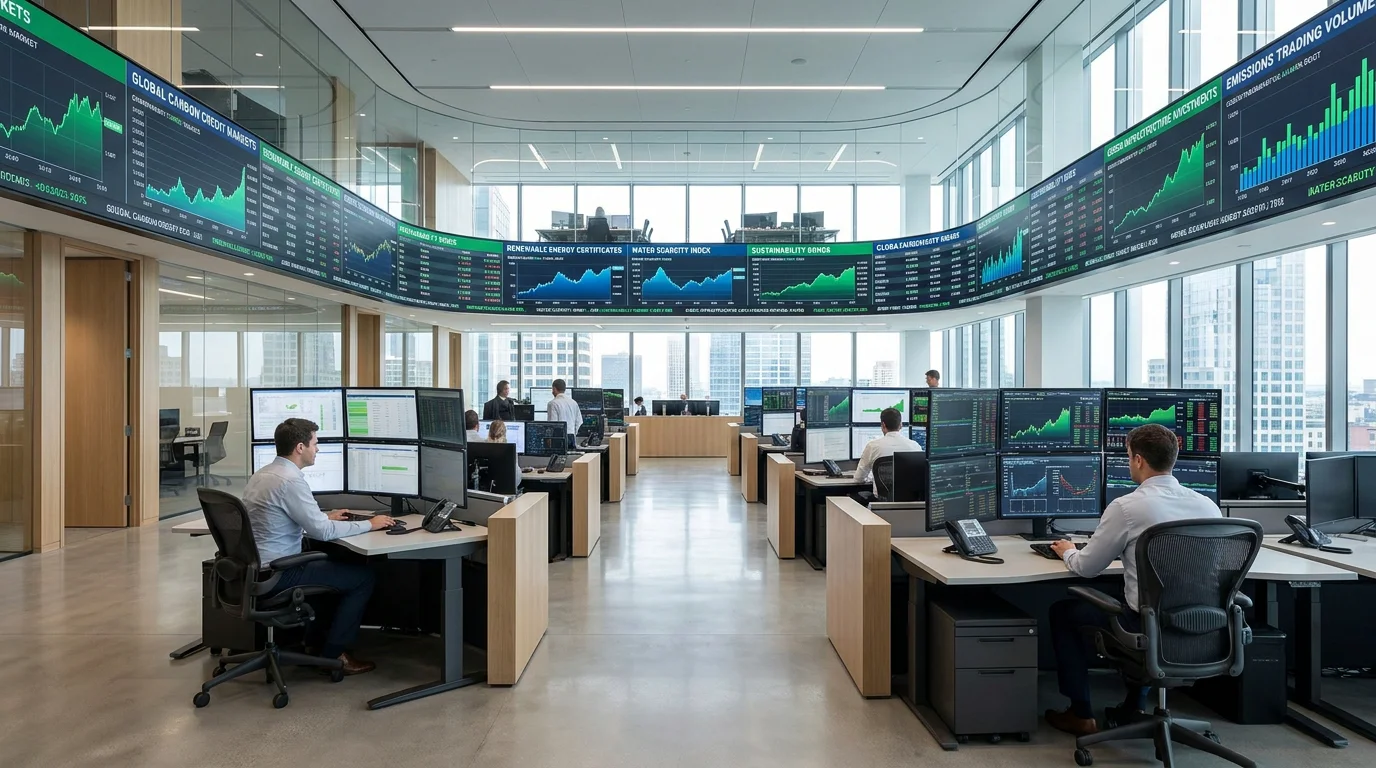

Global carbon markets are expanding at a pace that few commodity classes can match. The carbon credit trading platform market was valued at USD 171.72 billion in 2025 and is predicted to reach USD 926.40 billion by 2035, growing at an 18.4% CAGR during the 2026 to 2035 forecast period, according to an InsightAce Analytic report. That trajectory reflects an unmistakable reality: the infrastructure through which organizations buy and sell emission rights has become a strategic asset, not merely a compliance checkbox.
Whether you are an industrial operator fulfilling obligations under the EU Emissions Trading System or a financial institution seeking new asset classes, understanding platforms for carbon trading is essential. This guide examines how these platforms function, what distinguishes the best from the rest, and where the market is heading. For readers specifically interested in the European compliance segment, our ETS trading platforms page offers a focused overview of how to access the EU carbon market.
What Is a Carbon Trading Platform and How Does It Work?
A carbon trading platform is a digital marketplace that connects buyers and sellers of carbon emission units. These units may be compliance allowances (such as EU Allowances, or EUAs, under the EU ETS) or voluntary carbon credits generated by emission reduction projects. The platform handles core functions including price discovery, order matching, trade execution, and settlement.
The mechanism itself is straightforward in principle. Regulated markets operate under cap and trade systems, where a governing body sets a ceiling on total emissions and distributes or auctions allowances. Entities that reduce emissions below their allocation can sell surplus allowances; those exceeding their cap must purchase additional units. Major factors favoring adoption include regulatory mandates, corporate net-zero commitments, and the need for transparent, efficient carbon offset transactions.
Voluntary markets follow a similar logic but without a regulatory cap. Voluntary trading platforms are specialized digital marketplaces that enable seamless buying and selling of verified carbon credits from projects like reforestation, renewable energy, and methane abatement, supporting corporate net-zero ambitions outside mandatory schemes. Both market types rely on platforms that provide real-time pricing, custody of assets, and reliable settlement.
Compliance Markets Versus Voluntary Markets: Two Distinct Ecosystems
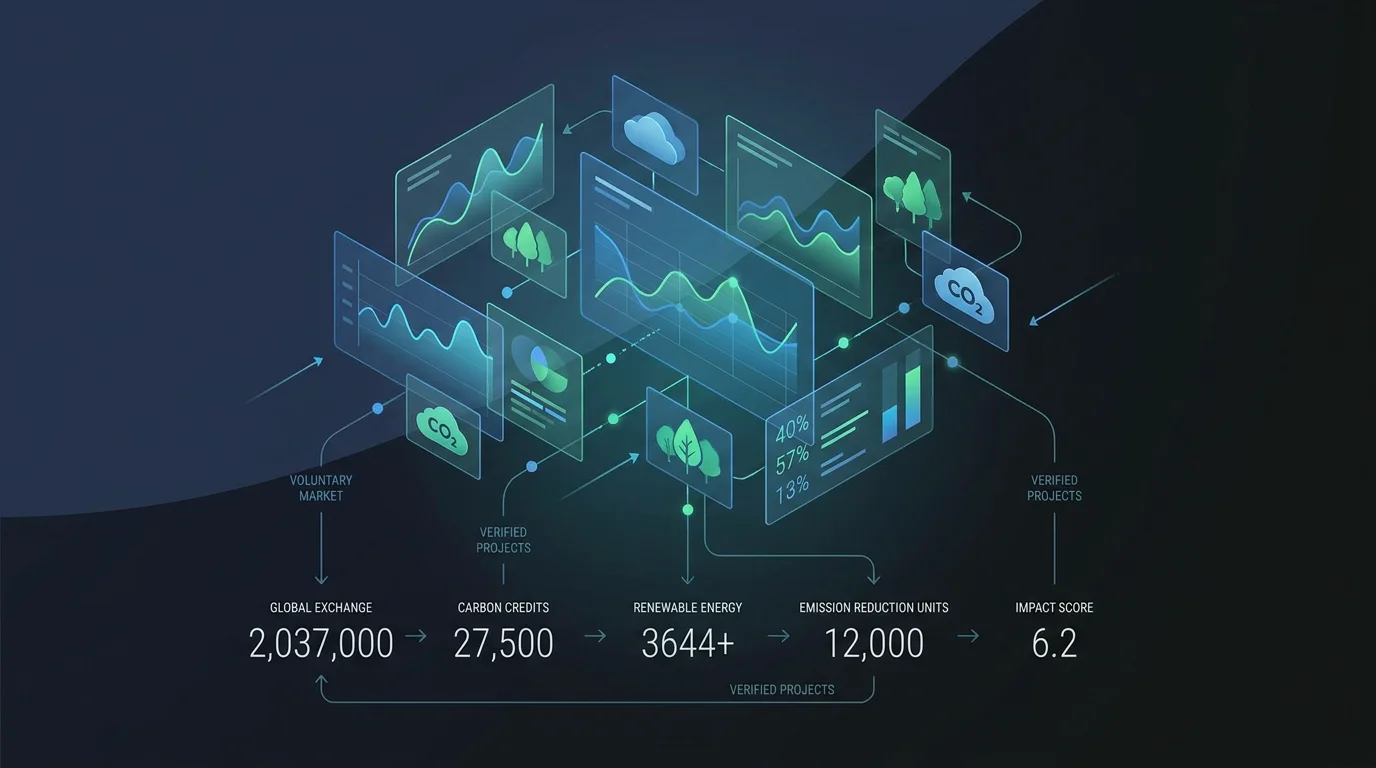
Understanding the distinction between compliance and voluntary carbon markets is critical when evaluating a trading platform. The two ecosystems differ in regulatory oversight, unit types, pricing dynamics, and participant profiles.
Compliance carbon markets are government-mandated systems. The EU ETS, the world's largest, requires thousands of industrial installations and airlines to hold allowances equal to their verified emissions each year. Prices in these markets are driven by policy tightening, auction volumes, and macroeconomic factors. For organizations operating under these regulations, our EU ETS trading platforms guide details how to choose the right execution venue.
Voluntary carbon markets serve organizations that voluntarily offset emissions not covered by regulation. This market is experiencing rapid growth due to surging corporate net-zero pledges, heightened ESG reporting requirements, and expanding high-quality project pipelines. The voluntary trading platform market alone is projected to grow from USD 1.15 billion in 2026 to USD 5.26 billion by 2034, exhibiting a CAGR of 20.8% during the forecast period, according to Intel Market Research.
For participants in both segments, a single platform that covers multiple asset classes and registries can dramatically reduce operational friction. The key is selecting an environment that aligns with your regulatory obligations and trading strategy.
Essential Features to Evaluate in a Carbon Trading Platform
Not every platform serves every participant equally. The following criteria should guide your evaluation:
- Real-time price visibility: Transparent order books and live pricing allow you to make informed decisions. Opaque pricing structures, common in broker-mediated deals, can hide costs.
- Flexible trade sizing: Standard exchange lots (often 1,000 allowances) can exclude smaller participants. Platforms that allow trades from a single unit open the market to a wider range of organizations.
- Pre-trade risk controls: Robust position management and risk checks before execution protect against unintended exposure, especially during volatile sessions.
- API access and automation: For financial participants, the ability to integrate trading into existing risk and portfolio management systems via APIs is indispensable.
- Custody and asset protection: Segregated custody ensures that your emission allowances and cash remain legally yours. Look for clearing guarantees and deposit protection schemes.
- Regulatory compliance: MiFID II eligibility, KYC/KYB onboarding, and registration on public emission allowance registries signal a platform's commitment to operating within the regulatory framework.
These criteria apply whether you are trading EUAs on a regulated exchange or transacting voluntary credits on a marketplace. Modern platforms encompass credit registry integration, price discovery, transaction settlement, and integrity verification, including centralized exchanges, blockchain-based tokenization systems, broker networks, auction mechanisms, and analytics-driven interfaces.
Why Minimum Trade Size Is a Competitive Differentiator
One of the most overlooked barriers to carbon market participation is the standard lot size. On traditional exchanges, a single lot typically represents 1,000 EUAs, equivalent to 1,000 tonnes of CO₂. At current EUA prices, this translates to a significant capital commitment that effectively shuts out smaller compliance entities, municipalities, and mid-market firms.
Platforms that allow trading from a single EUA (one tonne of CO₂) remove this barrier entirely. This granularity enables more precise procurement scheduling, reduces idle capital, and allows new market participants to build exposure incrementally rather than committing to large block trades from the outset.
For organizations that need to match allowance purchases to their actual emissions profile, the ability to trade in small increments is not a convenience; it is a structural advantage. We designed our programmable exchange to let you trade from just one EUA, giving compliance entities and financial participants alike the flexibility to execute at the size that fits their strategy.

How Technology Is Reshaping Carbon Market Infrastructure
Integration of blockchain technology, real-time monitoring, reporting and verification (MRV) systems, and digital registries has significantly improved the credibility and liquidity of voluntary carbon markets. These same technologies are reshaping compliance markets as well.
Programmable exchanges represent the next evolution of market infrastructure. By enabling configurable trade parameters, extended trading hours, and new contract specifications, these platforms move beyond the rigid structures of legacy exchanges. Participants can set up automated procurement schedules, configure alerts for price thresholds, and integrate execution directly into enterprise resource planning or treasury systems.
API-driven connectivity is increasingly important. Hedge funds, trading firms, and asset managers require programmatic access to place, modify, and cancel orders without manual intervention. This capability also supports sophisticated strategies such as algorithmic execution, spread trading, and automated hedging of physical positions.
The overall market trajectory confirms the technology thesis. The global carbon credit trading platform market is projected to grow from $235.50 million in 2026 to $1,272.11 million by 2034, at a CAGR of 23.47%, according to Fortune Business Insights. Platforms that fail to invest in technological infrastructure will struggle to capture this growth.
Regional Dynamics: Europe, North America, and Emerging Markets
The geographic distribution of carbon trading activity reflects regulatory maturity and policy ambition. Europe remains the anchor of compliance-based carbon trading, with the EU ETS serving as the global benchmark. For participants navigating the broader landscape of emission-linked instruments, our environmental commodities trading platforms guide provides additional context.
North America held the second-highest market share in 2025, valued at USD 53.77 million, and is anticipated to take the leading share in 2026 with a value of USD 63.32 million. The growth of carbon credit trading platforms in North America is primarily driven by strong regulatory frameworks, such as the U.S. Environmental Protection Agency's Clean Power Plan and California's Cap-and-Trade Program, which place emissions reduction targets on industries.
Emerging carbon markets in Asia-Pacific, Latin America, and the Middle East are also gaining traction. China's national ETS, launched in 2021, covers the power sector and is expected to expand in scope. These developments create demand for platforms that can support cross-border trading and multi-registry integration.
Comparing Leading Approaches to Carbon Trading Platforms
The market includes several types of platforms, each serving different needs. The table below compares the primary approaches available to participants in 2026.
| Platform Type | Minimum Trade Size | Real-Time Pricing | API Access | Custody Protection |
|---|---|---|---|---|
| Initiativ (Programmable Exchange) | 1 EUA | Yes (live order book) | Yes | Segregated; FGDR guarantee up to 100k EUR |
| Traditional Compliance Exchanges | 1,000 EUAs (standard lot) | Yes | Varies | Clearing house backed |
| OTC Broker Networks | Negotiable | No (quote-based) | Rarely | Counterparty dependent |
| Voluntary Credit Marketplaces | 1 credit (varies) | Some platforms | Some platforms | Registry based |
For compliance entities and financial participants seeking a combination of low minimum trade sizes, live pricing, API access, and robust custody, a programmable exchange model offers the most comprehensive solution. Understanding the routes to market for carbon emissions trading can further clarify which approach aligns best with your operational needs.
Building a Long-Term Carbon Trading Strategy
Selecting a platform is only the first step. A durable carbon trading strategy integrates procurement, risk management, and regulatory compliance into a unified workflow. Consider the following principles:
- Align purchases with your compliance calendar. Spreading procurement across the year, rather than purchasing in bulk at surrender deadlines, can reduce average cost and exposure to price spikes.
- Automate where possible. Configurable alerts and API-based execution allow you to respond to market moves without constant manual monitoring.
- Diversify instruments. Combining spot EUAs with derivatives (futures and options) provides hedging flexibility and forward price certainty.
- Monitor regulatory developments. Policy changes, such as adjustments to the Market Stability Reserve or expansion of covered sectors, directly affect supply dynamics and pricing.
- Prioritize custody and counterparty safety. Ensuring segregated ownership of both cash and allowances protects your position in all market conditions.
These principles apply whether you manage a small compliance portfolio or operate a large-scale trading desk. The right platform should make it straightforward to implement them all in one place.
The carbon market is entering a period of structural expansion, driven by tightening emissions caps, broadening regulatory coverage, and growing corporate demand for credible offsets. The carbon credit trading platform market is expected to grow at an 18.4% CAGR during the 2026 to 2035 forecast period. For any organization with exposure to carbon pricing, the choice of platform for trading carbon is now a strategic decision with direct financial and compliance implications. With real-time pricing, flexible trade sizes starting from a single EUA, and robust custody safeguards, our exchange is built for participants who demand both precision and reliability. To explore how it works, discover our trading platforms and take the first step toward a more efficient carbon market strategy.
Frequently Asked Questions
Who can participate on a carbon trading platform?
Participation depends on the platform type and the market it serves. Compliance platforms such as those operating under the EU ETS typically require participants to be MiFID II professional clients, which includes industrial operators, banks, trading firms, and asset managers. We offer a streamlined onboarding process with KYC/KYB verification to ensure eligible entities can begin trading quickly.
What is the difference between a carbon allowance and a carbon credit?
A carbon allowance (such as an EUA) is a permit issued under a compliance system that entitles the holder to emit one tonne of CO₂. A carbon credit is a unit generated by a verified emission reduction project and is typically traded on voluntary markets. Both can be bought and sold on trading platforms, though the regulatory frameworks and pricing dynamics differ significantly.
How much capital do I need to start trading carbon?
This varies widely by platform. Traditional exchanges require a minimum lot of 1,000 EUAs, which can represent a substantial outlay. However, our programmable exchange allows you to trade from just one EUA (equivalent to one tonne of CO₂), making carbon market entry accessible to organizations of all sizes.

Let’s connect
Do you want more information about what we do?