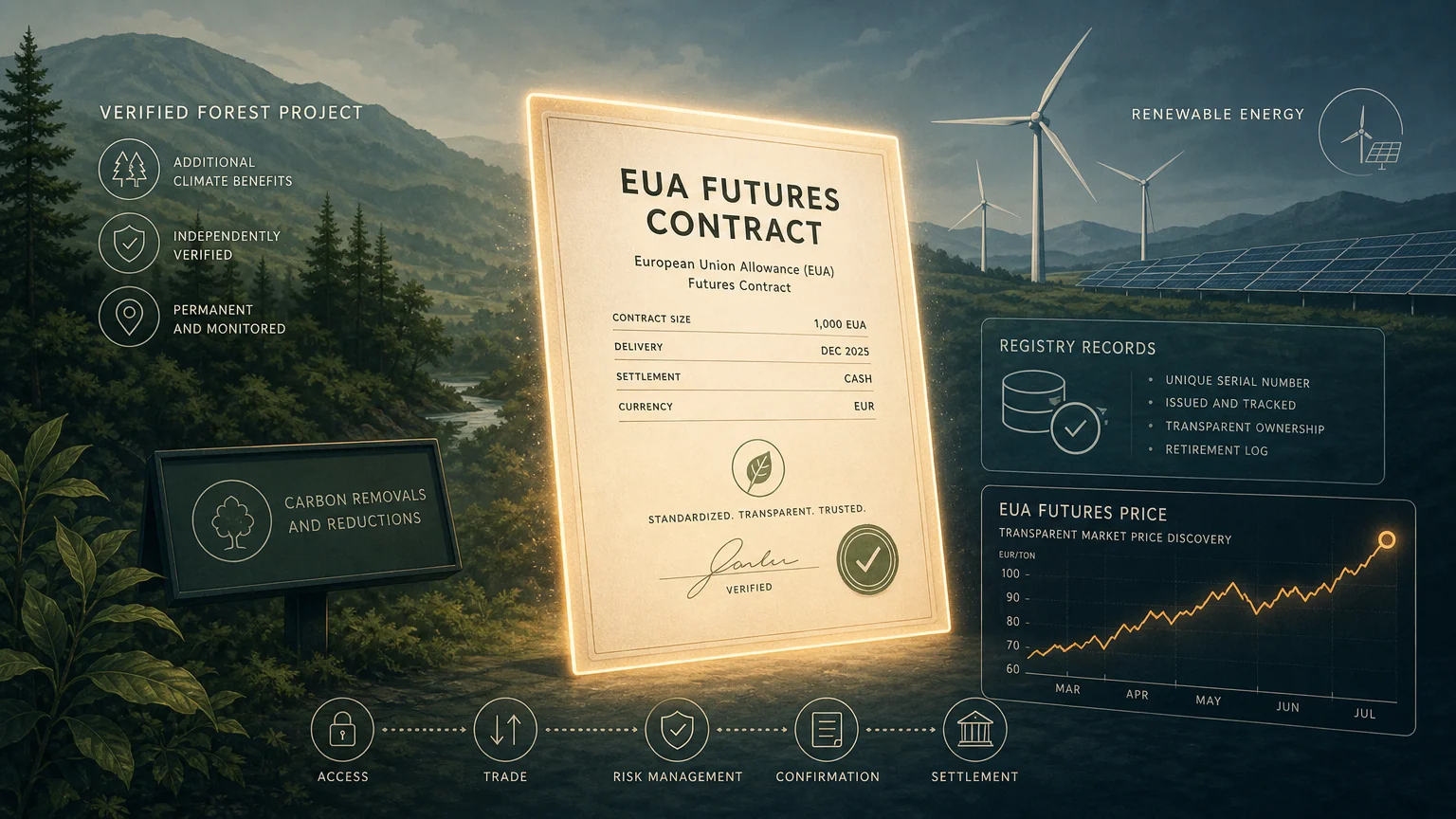


Summary: EUA prices trade near €76 in May 2026, up over 7% year on year, with forecasts pointing toward €83–€145 by 2030.
A single carbon allowance now costs more than many compliance entities budgeted for just twelve months ago. EU Carbon Permits rose to approximately €75.51, the highest level since February 2026, gaining over 13% in a four-week span and more than 14% over the trailing twelve months. For compliance buyers, financial traders, and sustainability teams alike, understanding the price of EU Allowances (EUAs) is no longer optional; it is central to cost management, risk strategy, and climate planning.
This article breaks down the current EUA price level, the structural and geopolitical forces behind recent movements, credible forecasts through 2030 and beyond, and practical approaches to trading these allowances more efficiently. Whether you hedge industrial emissions or manage a carbon portfolio, the data below will sharpen your market view.
What Is the Current EUA Price?
As of early May 2026, EU Carbon Permits increased to €75.51, the highest since February 2026. The benchmark contract for difference (CFD) that tracks this commodity shows a clear recovery from the lows seen in late 2025. Over the past four weeks, the price gained 13.05%, and in the last twelve months it climbed 14.36%.
On yearly futures, the picture is comparable. European carbon prices (EUA, contract for December 2026) exceeded €90 per tonne in January this year, reaching €92 on January 15–16, 2026, a level not seen in over two years. However, prices pulled back from those January highs on profit taking and geopolitical uncertainty before recovering in spring.
For context, the price of EUAs exceeded €100 per metric ton of CO₂ for the first time in February 2023, marking the all-time high in the EU Emissions Trading System's two-decade history. Current levels remain well below that peak, which creates an interesting setup for both compliance buyers timing their procurement and speculative participants positioning for a potential rebound.

Key Drivers Behind EUA Price Movements in 2026
Carbon prices do not move in isolation. Several structural and cyclical factors are converging to shape EUA market dynamics in 2026.
Policy and Market Stability Reserve Reforms
Prices were supported after Brussels proposed adjustments to the Market Stability Reserve (MSR) that would scrap the invalidation of certain permits, allowing more allowances to be retained for potential future use while leaving key supply controls unchanged. The move suggests policymakers aim to limit volatility without immediately flooding the market with additional supply. According to Enerdata's carbon price forecast, a revision of the ETS directive and the MSR decision is planned for 2026, opening the way to reform of different aspects of the EU ETS regarding its future ambition, scope, and design.
CBAM Goes Live
The Carbon Border Adjustment Mechanism added a new structural floor to the market. On April 7, 2026, the European Commission published the first official CBAM price at €75.36 per tonne of CO₂, making it the world's first operational carbon border price. CBAM ties import levies directly to the EUA price, which broadens the pool of entities with a stake in carbon cost management.
Geopolitics and Energy Markets
Carbon prices have also been underpinned by broader energy market tensions linked to the Middle East conflict, which has pushed energy costs higher and sharpened concerns over Europe's industrial competitiveness. Higher gas and power prices increase the incentive to switch from coal to gas, which raises demand for EUAs among generators. In parallel, EUA futures fell to €84.9 per tonne in January due to sellers linked to President Trump's threats of new tariffs for certain EU countries and the UK, illustrating how quickly geopolitical shocks can move the market.
Speculative Positioning
According to the Financial Times, hedge funds and speculative investors are increasing their positions in EU carbon markets amid a looming shortage. Investment funds have sharply increased their net long bets on carbon allowances since August last year, reaching their highest level since records began in 2018. This institutional momentum adds liquidity but also amplifies short-term volatility.
EUA Price Forecasts: Where Are Prices Headed?
Forecasting carbon prices is inherently uncertain. Regulatory reviews, macro shocks, and shifts in energy mix all introduce noise. Still, the consensus among major institutions leans bullish over the medium to long term.
| Source | 2026 Forecast | 2030 Forecast | 2035 Forecast |
|---|---|---|---|
| ING | Avg. €83/t | — | — |
| BBVA | €80–€100/t | — | — |
| ABN AMRO | — | €145/t | €200/t |
| GMK Center (consensus) | — | €126/t | — |
| Montel | Avg. €92.02/t | — | — |
ING expects the average price of emission allowances in the EU to reach €83 per tonne this year, compared to an average of nearly €75 in 2025. BBVA's baseline scenario for 2026 assumes carbon allowances will trade in the range of €80–€100 per tonne. Looking further ahead, ABN AMRO's research paints an even more aggressive picture: their baseline scenario sees EUA prices rising to €145 per tonne by 2030 and €200 per tonne by 2035, driven mainly by lower supply of allowances and a decline in the Total Number of Allowances in Circulation (TNAC).
By 2030, the consensus forecast among leading analytical institutions, including BloombergNEF, ABN AMRO, Refinitiv, ICIS, S&P Global, Aurora Energy Research, and the Potsdam Institute, points to an average price of approximately €126 per tonne. These projections suggest that compliance entities delaying procurement could face significantly higher costs. Understanding the routes to market in carbon emissions trading is essential to developing a cost-effective hedging strategy.
How the EU ETS Works: A Quick Refresher
The EU ETS became the world's first carbon market in 2005. The scheme limits GHG emissions by putting a price on carbon, incentivizing entities to reduce their output. A fixed number of emission allowances are put on the market each year, and that number is reduced annually. The EU ETS is now in its fourth phase, which runs from 2021 to 2030.
One EUA allows the holder to emit one tonne of CO₂ or CO₂-equivalent greenhouse gas. The EU ETS is the world's first and largest compliance carbon market, considered the template for other ETS systems worldwide. Allowances are distributed through a combination of free allocation (for sectors exposed to carbon leakage) and auctioning. They can be traded on spot and derivatives markets, giving compliance entities and financial participants flexibility in managing their exposure.
As noted by the European Environment Agency's ETS data viewer, the scope of the EU ETS has evolved since 2005, with the inclusion of new countries, activities, and gases. The upcoming ETS2, targeting road transport and buildings, should start operating in 2027, further expanding the system's reach and, potentially, its influence on pricing.
The Impact of Free Allocation Phase-Out on EUA Costs
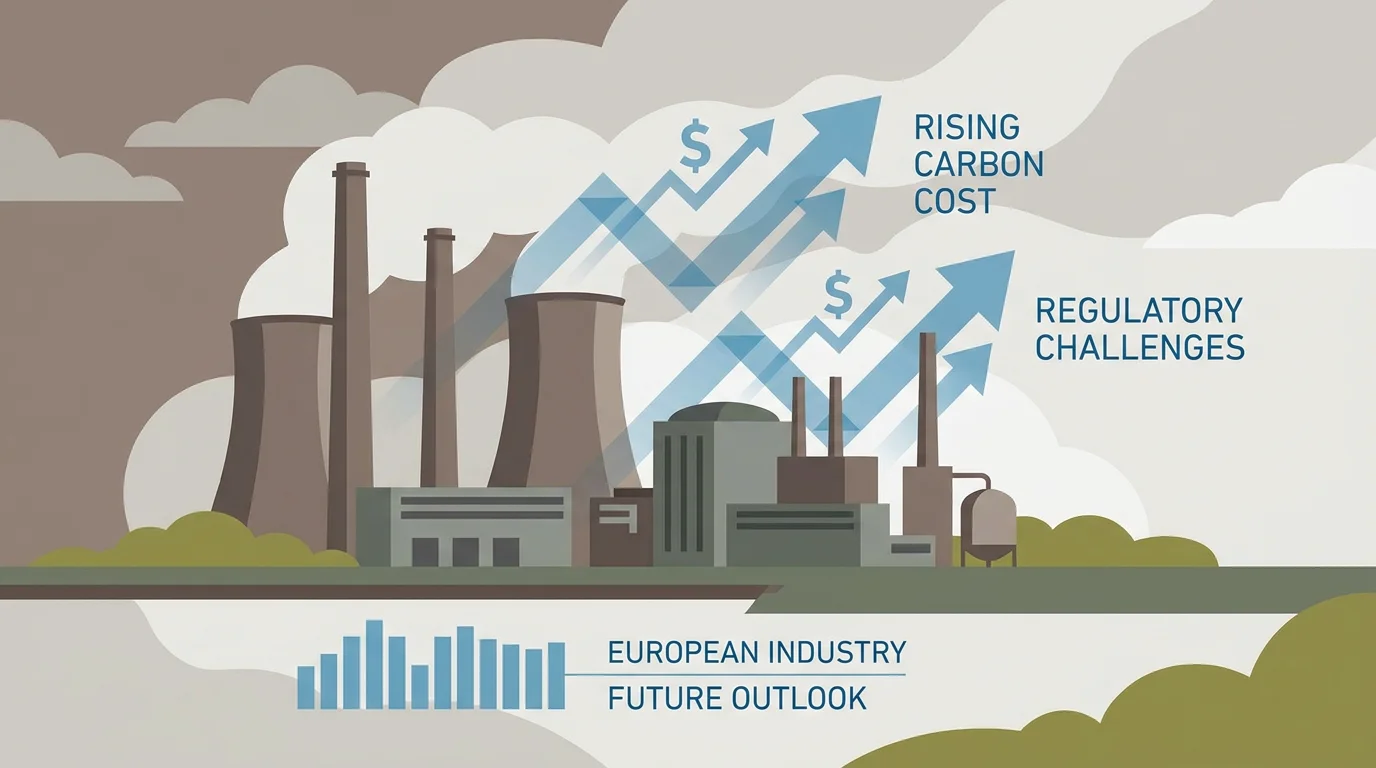
One of the most consequential structural shifts in the EU ETS is the scheduled phase-out of free allowances under the CBAM regulation. The EU ETS reform and the phase-out of free allocations are set to drive a sharp rise in effective EUA prices, materially increasing emissions costs for EU steel, aluminum, and other industrial producers.
According to Fastmarkets' analysis, effective EUA prices per tonne of industrial emissions will rise as high as 14 to 43 times 2025 levels by 2035 in aluminum and steel markets. A typical steel billet producer paid about €26 per tonne for emissions in 2025 (roughly 3.4% of total cost), and that share could increase to 30% by 2035.
For compliance entities, this transition demands proactive carbon procurement strategies. Waiting for the spot market at the last minute carries growing financial risk. Futures and options offer tools to lock in costs at known levels, and understanding the difference between broker vs exchange in carbon markets can help organizations choose the right execution venue.
How to Trade EUAs Efficiently in 2026
Traditionally, trading EU Allowances has required purchasing in standard lots of 1,000 EUAs, effectively a minimum ticket size of roughly €76,000 at current prices. This threshold shuts out smaller compliance entities, mid-market industrials, and nimble financial desks that want granular position management.
We built our platform to solve this problem. With our trading solutions for corporates and traders, you can trade from just 1 EUA (equivalent to 1 tonne of CO₂), access real-time price monitoring, and set configurable alerts so you never miss a market move. Pre-trade risk controls and API access let you integrate carbon trading into your existing risk systems without operational friction.
Small lot sizes are not a cosmetic feature. They enable dollar-cost averaging for compliance procurement, let treasurers test hedging strategies at low risk, and allow financial participants to take precise positions. Combined with competitive fees and longer trading hours, these capabilities make the carbon market accessible to a much broader audience.
Spot, Futures, and Options: Choosing the Right Instrument
The EU ETS offers multiple contract types, and the right choice depends on your objectives.
- Spot contracts deliver EUAs immediately (typically T+1 or T+2). They are ideal for compliance entities needing allowances for imminent surrender deadlines.
- Futures contracts allow you to lock in a price for delivery months or years ahead. The December yearly contract (CFI2Z) is the most liquid benchmark. Futures are essential for hedging long-term exposure.
- Options provide the right (but not the obligation) to buy or sell at a predetermined price. They are useful for protecting against downside while retaining upside potential.
The interplay between emissions trading vs voluntary carbon credits also matters for organizations that operate across both compliance and voluntary frameworks. Compliance EUAs carry regulatory force; voluntary credits serve different strategic objectives. Many sustainability teams benefit from combining both.
What the 2026 ETS Revision Could Mean for Prices
The 2026 revision of the ETS Directive and MSR Decision is expected to induce significant changes in the ETS and MSR designs, preparing for the decades ahead when the system will shift to a situation of allowance scarcity. Several reforms are under discussion.
The MSR reform may introduce stricter rules to remove more supply. Proposals range from maintaining or increasing the intake rate (currently at 24%) toward 36%, rather than letting it revert to 12% as scheduled from 2031. There are also calls to reduce the upper threshold from 833 million EUAs to around 500–700 million. A tighter MSR would structurally support higher prices.
ABN AMRO also considers a potential link between the EU ETS and UK ETS in 2027, which could lower prices by up to €8 per tonne by increasing market liquidity. This scenario, while still speculative, reminds us that carbon pricing is not a one-directional bet. Two-sided risk management is essential, and having direct market access vs exchanges clearly understood helps participants react swiftly to policy surprises.
Frequently Asked Questions
What determines the price of an EUA?
The EUA price is driven by the balance between the supply of allowances (set by the EU cap and adjusted by the MSR) and demand from compliance entities and financial participants. Energy prices, weather, industrial output, and regulatory signals all influence short-term movements.
Can small companies trade EUAs?
Historically, the 1,000 EUA minimum lot size made it difficult for smaller entities. Our exchange platform lets you trade from just 1 EUA, making carbon market participation accessible to mid-market and SMB compliance buyers as well as smaller financial desks.
Are EUA prices expected to rise long term?
Most major forecasters project higher EUA prices through 2030 and beyond, driven by a declining supply cap and the phase-out of free allocations. The consensus estimate for 2030 is approximately €126 per tonne, with some models projecting €145 or more. However, regulatory revisions and macro shocks can create short-term volatility.
The price of EU Allowances sits at the intersection of climate regulation, energy economics, and financial strategy. With CBAM now live, the MSR under review, and free allocations declining, the structural case for higher prices remains intact. Whether you are a compliance buyer, a risk manager, or a financial participant, staying close to real-time data and having the right execution tools is critical. Our platform offers small lot sizes, transparent live pricing, and pre-trade risk controls to help you navigate this market with precision. To get started, explore the next-generation emissions exchange we are building and see how it fits your workflow.