


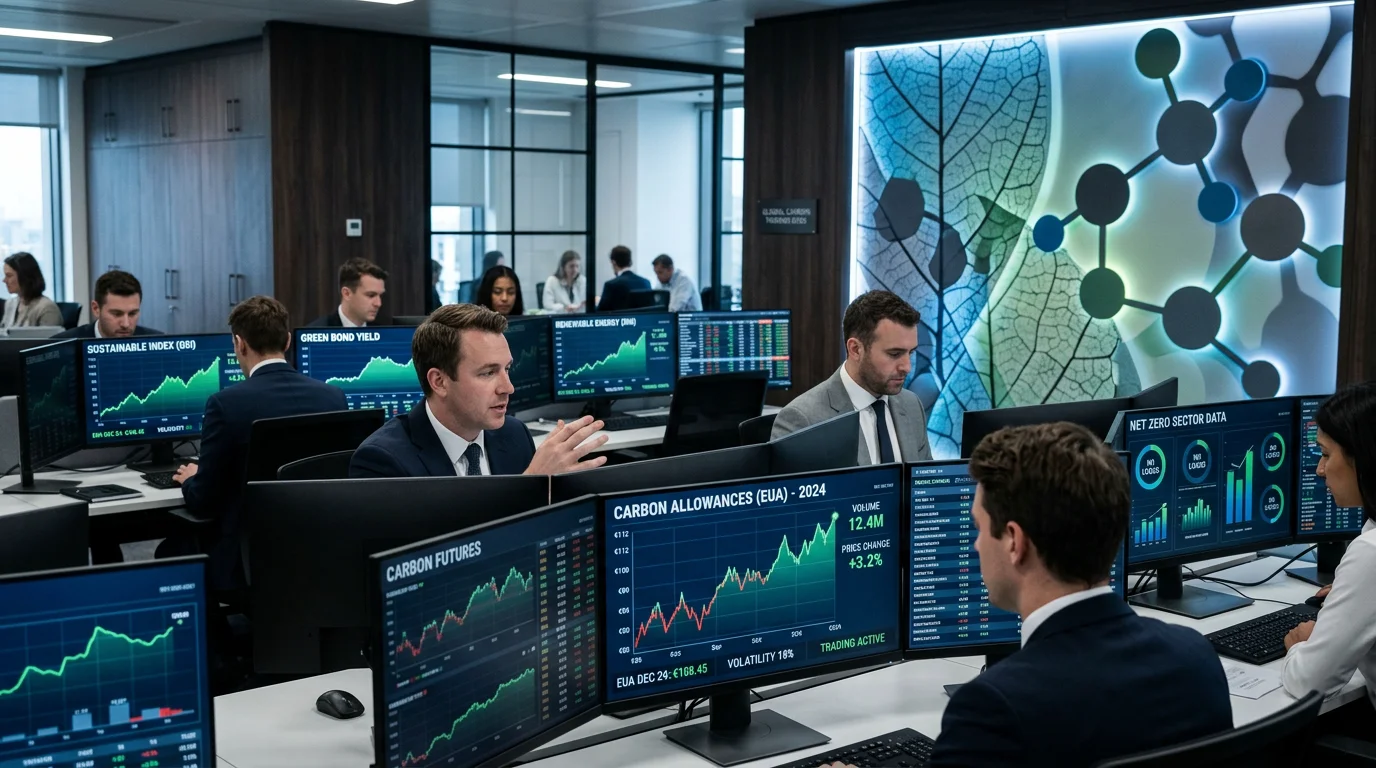

How large has the market for priced emissions actually become? In 2025, trading across EU carbon markets reached a scale that few observers anticipated a decade ago, turning permits to emit into a genuine financial instrument. Understanding carbon as an investable asset class now matters to industrial operators, banks, and asset managers alike. For a grounding in the underlying compliance mechanism, our Emissions Trading System (ETS) overview sets out how the framework functions.
The logic is straightforward. A regulator caps total emissions, issues a shrinking number of allowances, and lets participants trade them. According to ESMA figures, EU carbon markets rose to 777 billion euros in traded value in 2025, supported by strong activity and higher prices. That combination of scale, regulation, and price signals is precisely what turns an environmental policy tool into a recognised financial category.
What Makes Carbon a Distinct Asset Class
An instrument becomes an asset class when it acquires standardisation, liquidity, and data transparency. The emerging carbon asset class now displays all three. European Union Allowances (EUAs) are fungible, each representing one tonne of carbon dioxide, and they trade in spot and derivative form on regulated venues.
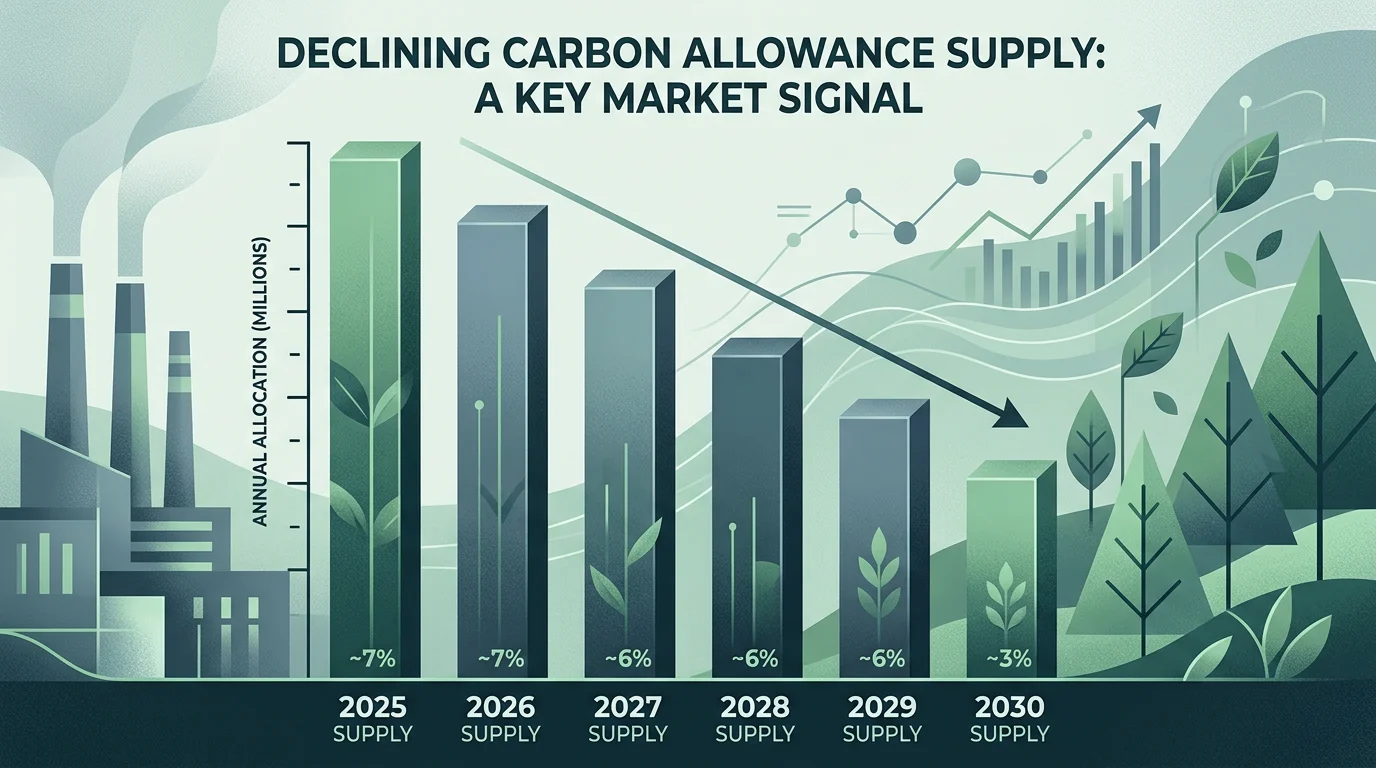
Two features separate carbon from conventional commodities. First, supply is set by policy rather than geology. Second, that supply is designed to decline every year, which structurally supports scarcity. This is why emission allowances behave differently from oil or metals: the regulator, not a mine or a well, controls the ceiling. To understand exactly how EUAs are created and allocated, you may consult our EU allowances explained resource.
How Carbon Prices Are Set and Why They Move
Price is the clearest evidence that carbon trades like a financial asset. In May 2026, EU carbon allowance futures averaged 74.04 euros per tonne, a 5.7 percent increase from March, according to IndexBox market data. Prices respond to natural gas spreads, industrial demand, policy revisions, and broader macroeconomic sentiment.
Volatility is part of the profile. ESMA noted that spot prices fell 29 percent over three months in early 2026 as expectations over future ETS rules shifted, while the market remained resilient. Historically, EU carbon permits reached an all-time high of 105.73 euros in February 2023, according to Trading Economics data. For a deeper look at how buyers and sellers converge on a price, our guide on Carbon market price discovery explains the mechanics in detail.
The Financial Participants Behind Market Liquidity
Carbon markets do not function on compliance demand alone. Financial intermediaries provide liquidity, act as counterparties to industrial firms, and help compliance entities manage price risk. Investment firms and credit institutions accounted for around 62 percent of overall trading volumes in 2025, ESMA reported.
This structure matters for anyone assessing carbon as an investment. Deep participation from banks, trading firms, and asset managers narrows spreads and improves execution. It also signals that professional capital treats carbon allowances as a portfolio component rather than a niche experiment, a shift that reinforces the asset class over time.
Durable Removal Credits: The Next Frontier
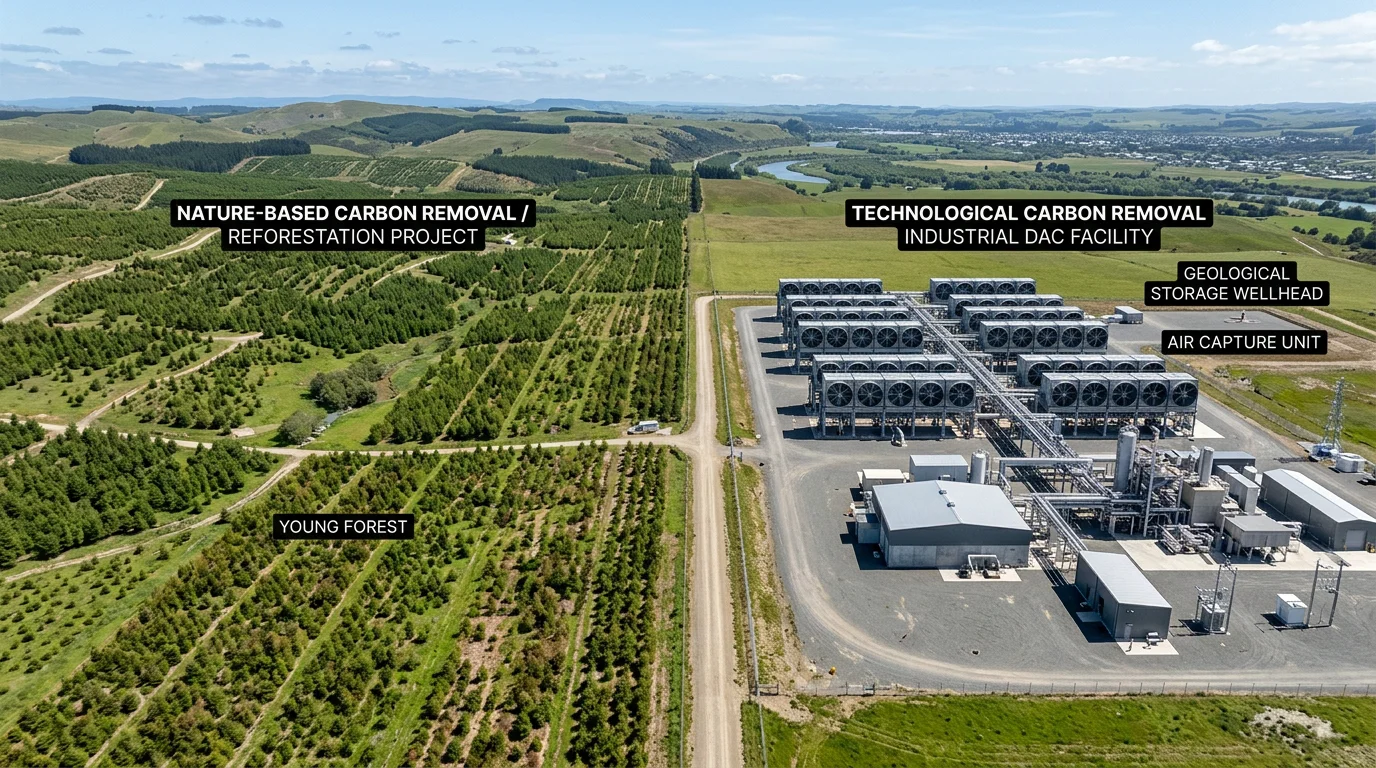
Beyond compliance allowances sits a second, younger segment: carbon dioxide removal credits. These represent tonnes of carbon verifiably removed from the atmosphere through methods such as biochar, bioenergy with carbon capture, direct air capture, and afforestation. For now, most trading occurs bilaterally and over the counter rather than on transparent exchanges.
Momentum is building nonetheless. The broader voluntary carbon market is projected by investment-research firm MSCI to reach as much as 35 billion dollars by 2030. Recent large-scale project financing, including debt facilities structured around long-term offtake agreements, demonstrates that nature-based removal credits can be arranged as a bankable, investable proposition. The path toward a standardised marketplace with reliable price feeds mirrors the route allowances already travelled.
Allowances Versus Removal Credits: A Practical Comparison
The two segments serve different purposes and sit at different stages of maturity. The table below summarises the practical distinctions, alongside the access model we provide for professional participants.
| Criterion | EU Allowances (EUAs) | Removal credits | Our exchange platform |
| Standardisation | High, one tonne per unit | Emerging, method dependent | Standardised EUA spot and derivatives |
| Liquidity | Deep, regulated venues | Limited, mostly bilateral | Real-time pricing and execution |
| Minimum trade size | Typically 1,000 EUA lots | Negotiated | From 1 EUA, equal to 1 tonne of CO₂ |
| Automation | Varies by venue | Rare | API access and pre-trade risk controls |
Where traditional venues require large minimum lots, we allow you to trade from a single allowance, with transparent live pricing and configurable alerts. If you require reliable venue access, our overview of ETS trading platforms explains how professional participants connect to the market.
Positioning Carbon Within a Portfolio
Professional investors generally treat carbon as a satellite allocation rather than a core holding. The appeal lies in a structurally declining supply: the EU applies an annual linear reduction to its cap, tightening the market year after year regardless of short-term industrial demand. That policy-driven scarcity is the central thesis for holding carbon emission allowances.
Risk, however, is real. Prices depend on the continued enforcement of caps and on legislative decisions that can shift sentiment quickly, as the early-2026 correction illustrated. A disciplined approach sizes the position modestly, monitors policy closely, and uses pre-trade controls to manage exposure before execution.
Final Perspective on Carbon as an Investment
The transformation of emissions permits into a credible carbon asset class is now well advanced on the compliance side and gathering pace for durable removal credits. Scale, regulation, and transparent pricing give participants a genuine instrument for both decarbonisation and financial exposure. The prudent path is to understand the policy drivers, respect the volatility, and access the market through venues that offer standardised pricing and robust risk controls. As supply continues to contract, informed and well-structured participation will matter more than timing alone.
Take action with Initiativ
Whether you manage compliance obligations under the EU ETS or seek measured financial exposure to carbon, you need execution that is fast, transparent, and controllable. Traditional venues often impose large lot sizes and limited visibility on live prices, which slows professional participation.
We operate a programmable exchange where you can trade EU Allowances from a single tonne rather than standard 1,000 EUA lots, with real-time price monitoring, configurable alerts, pre-trade risk controls, and API-enabled automation. Cash is held in a segregated account with clearing support. Explore our carbon markets solutions for traders and corporates and request access to our demo environment to begin.
Frequently Asked Questions
Is carbon really considered a financial asset class?
Yes. Carbon allowances trade in standardised units on regulated venues, with deep liquidity and transparent pricing. These characteristics, combined with substantial participation from banks and asset managers, place carbon firmly within recognised financial market structures.
What is the difference between allowances and carbon removal credits?
Allowances are compliance instruments capped and issued by a regulator, each equal to one tonne of emissions. Removal credits represent carbon verifiably taken out of the atmosphere and remain a younger, less standardised segment traded mostly bilaterally.
Why do carbon prices fluctuate so much?
Prices respond to energy costs, industrial demand, and policy decisions on future rules. In early 2026, for example, spot prices fell sharply over three months as expectations over ETS reform shifted, before the market stabilised.
Can smaller participants access the carbon market?
Yes, provided they meet onboarding and KYC requirements. On our exchange, you may trade from a single EU Allowance rather than the traditional 1,000 EUA lot, which lowers the barrier to entry considerably for professional clients.
What drives the long-term case for holding carbon allowances?
The EU reduces its emissions cap every year, creating structural scarcity independent of short-term demand. Many investors treat carbon as a small satellite allocation, capturing this supply constraint while accepting the policy-related volatility involved.



Let’s connect
Do you want more information about what we do?